GAD7 Scoring Guide: Accurate Results & Interpretation
The moment you complete a GAD7 assessment, you get a number that represents your anxiety level. But how is this score calculated, and what does it truly mean? If you've ever wondered about the process behind your results, you're in the right place. Understanding how your score is calculated helps you make sense of what you're experiencing and take meaningful next steps.
Let's demystify your score together. This guide shows you exactly how scoring works and what your results really mean for your daily life. The first step to clarity is knowledge, and an easy way to start is with a confidential anxiety screening.
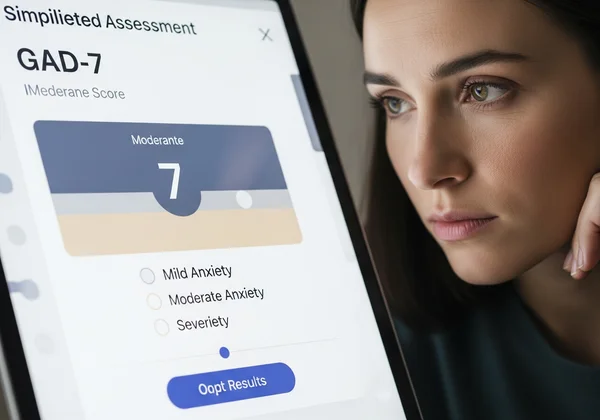
Understanding the GAD7 Assessment
Before diving into the numbers, it helps to understand the foundation of the test itself. The questionnaire is designed to be simple yet effective. Its structure is consistent and based on extensive clinical research, making it a reliable tool for screening anxiety symptoms.
The 7 Core Questions of the GAD7 Scale
The assessment consists of seven questions that ask about common symptoms of anxiety. These questions cover emotional and physical signs you've experienced over the last two weeks. They explore topics such as feeling nervous or on edge, not being able to stop worrying, having trouble relaxing, and feeling afraid something awful might happen. Each question provides a window into a different aspect of the anxiety experience.
Response Options: Frequency Scale Explained
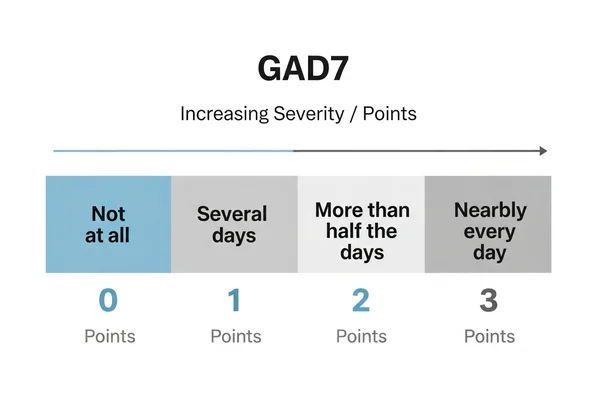
For each of the seven questions, you are asked to choose one of four possible answers. These answers measure how often you experience your symptoms, which is key to calculating the final score. The options are:
- Not at all
- Several days
- More than half the days
- Nearly every day
This simple frequency scale allows for a nuanced look at your experiences. It recognizes that symptoms can vary in intensity and persistence, providing a more accurate picture than a simple "yes" or "no" answer.
Assigning Points to Each Response
The first step in scoring is to assign a numerical value to each of your answers based on the frequency you selected. The point system is simple and logical. The more frequent the symptom, the higher the score.
- Not at all = 0 points
- Several days = 1 point
- More than half the days = 2 points
- Nearly every day = 3 points
This system directly translates your experiences over the past two weeks into quantifiable data. This forms the basis for your total score.
Calculating Your Total Score
Once you have assigned points to each of your seven answers, the next step is to add them all together. The sum of these points is your final score. The total will fall somewhere between 0 (if you answered "Not at all" to every question) and 21 (if you answered "Nearly every day" to every question). This single number provides a snapshot of your overall anxiety symptom severity. To ensure an error-free calculation, you can start your test on our platform for an instant, automated score.
Common Calculation Mistakes to Avoid
While the scoring is simple, a few common mistakes can occur during manual calculation. The most frequent error is misassigning points to the frequency options. For example, some people accidentally start counting at 1 instead of 0. Another common mistake is a simple addition error. Using an automated tool is the best way to avoid these issues and ensure your score is completely accurate. It removes the guesswork and lets you focus on understanding the results.
Interpreting Your GAD7 Score Results
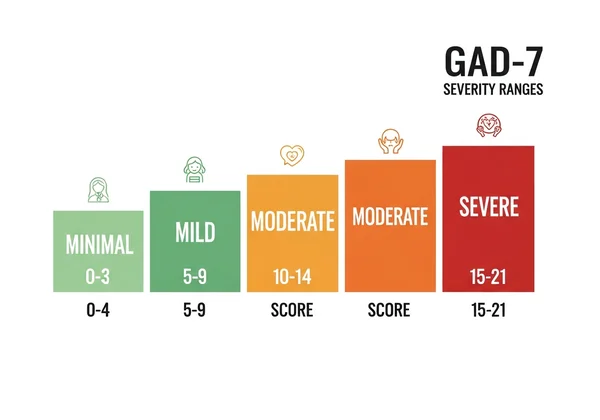
Once you have your total score, the next crucial step is understanding what it means. The scores are categorized into different levels of anxiety severity, from minimal to severe. These categories provide context and can help guide your next steps. Remember, these are not diagnoses but indicators of symptom levels.
Mild Anxiety: Score Range 5-9
A score in the 5 to 9 range suggests mild anxiety symptoms. While these symptoms may be noticeable, they might not significantly interfere with your daily life. This level is often described as "watchful waiting," where monitoring your symptoms is recommended. It could be a good time to explore stress management techniques, such as mindfulness or regular exercise, to see if they help.
Moderate Anxiety: Score Range 10-14
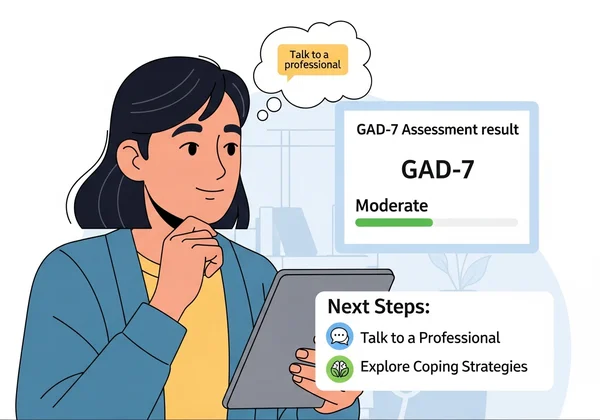
A score between 10 and 14 indicates moderate anxiety. At this level, symptoms are likely more persistent and may be starting to impact your work, social life, or daily routines. This score often suggests that a further evaluation by a healthcare professional could be beneficial. It's a clear signal that your symptoms warrant attention. Seeking support is a proactive and positive step. Our platform can help you take that first step and see your results instantly.
Severe Anxiety: Score Range 15-21
Scores of 15 or higher fall into the severe anxiety range. This suggests that your symptoms are frequent, intense, and likely causing significant distress or impairment in your life. A score in this range strongly indicates the need for a conversation with a doctor or mental health professional. Treatment is highly effective, and getting a professional assessment is the most important next step toward feeling better.
Relationship Between Score and Symptom Severity
There is a direct correlation between your score and the severity of your anxiety symptoms. A higher number generally means that symptoms are more frequent and distressing. For example, someone with a score of 16 is likely experiencing disruptive anxiety on most days. In contrast, someone with a score of 6 may only have occasional, manageable worries. This relationship helps make the abstract feeling of anxiety more concrete and understandable.
Score Stability and Reliability Factors
The GAD7 is a scientifically validated and reliable screening tool. Its stability means that if your symptoms haven't changed, your score should remain relatively consistent over time. However, it's important to remember that your score is a snapshot of the last two weeks. Life events, stress levels, and even physical health can cause your score to fluctuate. Taking the assessment periodically can be a helpful way to track your symptoms and see if coping strategies are working.
Your GAD7 Score as a Starting Point for Understanding Anxiety
Your score gives you clarity about what you're experiencing. It turns those vague feelings of worry into something concrete you can actually work with. It’s not a final diagnosis but rather a vital first step on the path toward better mental health. It empowers you with the knowledge to have more informed conversations with loved ones and healthcare professionals.
Understanding how your score is calculated and what it means is a crucial part of this journey. But the most valuable insights come from the assessment itself. If you're ready to gain clarity on your anxiety levels, you can take your free, confidential anxiety screening and receive immediate, personalized feedback to help you decide on your next steps.
GAD7 Scoring FAQ
What is the highest possible GAD7 score?
The highest possible score is 21. This result is achieved by answering "Nearly every day" (which corresponds to 3 points) for each of the 7 questions (7 questions x 3 points = 21). A score in this upper range typically indicates severe anxiety symptoms and strongly suggests a conversation with a healthcare professional is needed.
Can I calculate my GAD7 score manually?
Absolutely. You can easily calculate your score by hand. Each response is scored as follows: "Not at all" = 0, "Several days" = 1, "More than half the days" = 2, and "Nearly every day" = 3. Simply add the points from all seven questions to get your total. To guarantee accuracy and get instant interpretation, our website provides a fast, automated calculator.
Why do different sources show slightly different score ranges?
While the scoring method is standardized, you might occasionally see minor variations in the interpretation ranges (mild, moderate, severe). The most widely accepted and clinically validated ranges are: 0-4 (minimal), 5-9 (mild), 10-14 (moderate), and 15-21 (severe). These thresholds are based on the original research by the scale's creators, Spitzer et al., and are the standard used on our platform.
How accurate is the GAD7 scoring system?
This assessment has been extensively researched and validated in numerous clinical studies. It shows strong reliability for screening for Generalized Anxiety Disorder and other anxiety conditions. It is a highly accurate screening tool, but it is not a diagnostic tool. Its purpose is to identify the presence and severity of anxiety symptoms to help you and your doctor decide if further evaluation is needed.