GAD7 Score Interpretation and Anxiety Management Guide
Identifying your GAD7 score is a courageous first step. Many people feel a mix of relief and uncertainty when they see their final number. You might wonder, "What does this score actually mean for my daily life?" Understanding your results is essential for choosing the right path forward.
A GAD7 score provides a snapshot of your anxiety levels over the last two weeks. It is a scientifically validated tool used by doctors and therapists worldwide. While the number provides clarity, it is just the beginning of your process toward better mental health. This guide will help you navigate what comes next.
If you have not yet taken the assessment, you can begin your free GAD7 screening to get your baseline score. If you already have your results, let's explore what those numbers suggest about your treatment and management options.
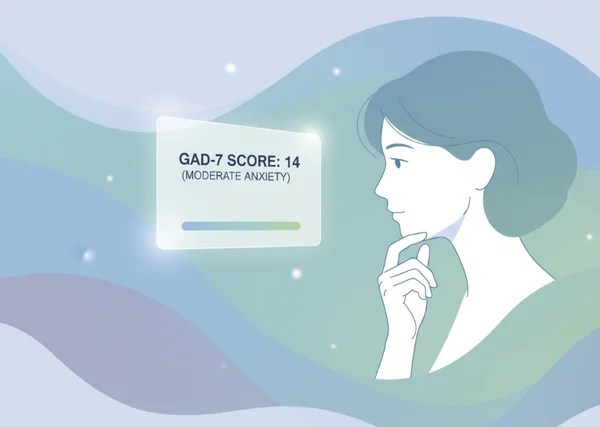
What Your GAD7 Score Really Means
The GAD7 (Generalized Anxiety Disorder 7-item scale) measures the severity of anxiety symptoms. It evaluates factors like persistent nervousness, the inability to stop worrying, and general restlessness. Your total score, ranging from 0 to 21, helps categorize your experience into specific levels.
Keep in mind that this score is a screening tool rather than a final medical diagnosis. It simply indicates how much anxiety is impacting your life right now. By understanding these levels, you can have a more productive conversation with a healthcare professional.
GAD7 Score Ranges: Mild, Moderate, and Severe Anxiety
The GAD7 uses a point system to help you interpret your results. Here is how the scoring typically breaks down:
- 0–4 (Minimal Anxiety): Your symptoms are likely manageable or within a normal range for daily stress. Usually, no clinical intervention is required.
- 5–9 (Mild Anxiety): You may feel tense or worried more often than usual. While not usually requiring medication, this is an ideal time to implement mindfulness for anxiety or lifestyle changes.
- 10–14 (Moderate Anxiety): At this level, anxiety often starts to interfere with work, sleep, or social life. Professional counseling or therapy is often recommended.
- 15–21 (Severe Anxiety): This score suggests that anxiety is significantly impacting your quality of life. Seeking help from a doctor or mental health specialist is highly encouraged.
How Your GAD7 Score Relates to Daily Functioning
Your score reflects your ability to function in the real world. For example, a "Mild" score might mean you can still do your job but feel exhausted by the end of the day. You might find yourself overthinking small decisions or feeling restless during quiet moments.
A "Moderate" or "Severe" score often correlates with physical symptoms. You might experience muscle tension, headaches, or a racing heart. At these levels, tasks that used to be easy—like answering emails or meeting friends—can feel overwhelming. Identifying your score helps you realize that these struggles are not a personal failing, but a recognized condition that can be managed.
Mindfulness Approaches for GAD7 Anxiety Management
Mindfulness is an evidence-based strategy for managing anxiety. It involves staying present in the moment without judgment. For many people, mindfulness is a vital first step after receiving their GAD7 clinical tool results.
Unlike some treatments, mindfulness can be practiced anywhere. It helps reset the nervous system, moving it from a state of "fight or flight" back to a state of calm.
When Mindfulness Works Best: GAD7 Score Considerations
Mindfulness is effective for everyone, but it is particularly helpful for those in the Mild (5–9) and Moderate (10–14) ranges. In these stages, your brain is often very receptive to learning new emotional regulation habits.
For those with a "Mild" score, mindfulness may be all you need to keep symptoms from escalating. If you have a "Moderate" score, mindfulness serves as a vital companion to therapy. It provides you with immediate tools to handle a panic attack or a spiral of "what if" thoughts.
Practical Mindfulness Techniques for Different Anxiety Levels
You can tailor your mindfulness practice to match the intensity of your anxiety:
-
For Minimal/Mild Anxiety: Try a "Body Scan." Spend five minutes focusing on each part of your body, from your toes to your head. Notice any tension and breathe into it.
-
For Moderate Anxiety: Use the "5-4-3-2-1 Grounding Technique." Acknowledge 5 things you see, 4 things you can touch, 3 things you hear, 2 things you can smell, and 1 thing you can taste. This pulls your mind back to the present.
-
For Severe Anxiety: Focus on "Box Breathing." Inhale for 4 seconds, hold for 4, exhale for 4, and hold for 4. This sends a direct signal to your brain to slow down.
Research-Backed Mindfulness Techniques for Anxiety
Studies consistently show that regular mindfulness practice changes the brain's structure. It can shrink the amygdala, which is the part of the brain responsible for fear and stress. At the same time, it strengthens the prefrontal cortex, which handles logic and emotional control.
Regular mindfulness practice can lower your GAD7 score over time. Track your progress with our online screening tool. This scientific backing gives many users the confidence to stick with their routine, even when progress feels slow.
Medication Considerations Based on Your GAD7 Results
Sometimes, lifestyle changes and mindfulness are not enough to manage symptoms. This is where medication may play a role. Medication is not a "crutch." Instead, it is a tool that can balance brain chemistry, making it easier for you to apply your other coping skills.
If your anxiety feels like a constant physical weight that you cannot lift, it is worth discussing medication options with a doctor.
Understanding When Medication Might Be Recommended Based on GAD7 Scores
Generally, medication is considered when a user consistently scores in the Moderate (10–14) or Severe (15–21) ranges. If your score stays high despite trying therapy or relaxation techniques, a biological approach might be necessary.
A high GAD7 score indicates that your internal alarm system is stuck in the "on" position. Medication can help lower the volume of that alarm. This allows you to engage more deeply in talk therapy or daily activities that previously felt impossible.
Types of Medications for Different Anxiety Severity Levels
There are several categories of medication that a doctor might suggest:
- SSRIs and SNRIs: These are often the first choice for long-term anxiety management. They work by increasing the levels of mood-regulating chemicals in the brain.
- Benzodiazepines: These provide short-term relief for severe panic. They are not typically used for long-term management due to the risk of dependency.
- Beta-Blockers: These treat the physical symptoms of anxiety, such as a fast heartbeat or shaking. They are often used for performance-related stress.
The Role of Professional Medical Evaluation for Medication Decisions
You should never attempt to self-medicate or use someone else's prescription. Every person's body reacts differently to various medications. A professional medical evaluation is essential to ensure you receive the right type and dosage.
Your doctor will use your comprehensive GAD7 data as one piece of information in their evaluation. They will also look at your medical history, sleep patterns, and other health factors. This collaborative approach ensures that your treatment is both safe and effective.
Integrating Approaches: Creating Your Personalized Anxiety Management Plan
The most successful recovery stories usually involve a combination of methods. Anxiety is complex, so your solution should be multi-faceted. By integrating different approaches, you build a "toolkit" that covers all aspects of your mental health.
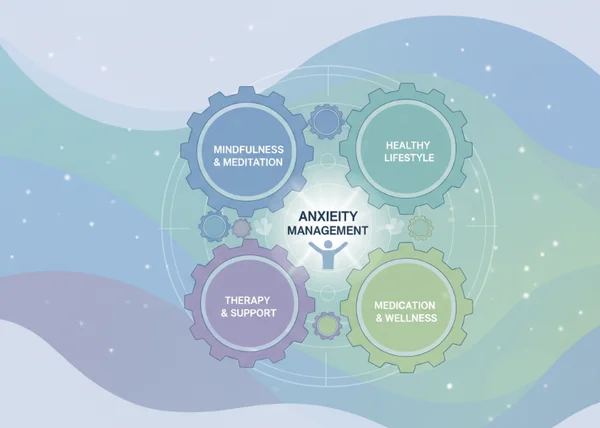
Combining Mindfulness and Medication: A Professional Perspective
Think of medication as a way to "clear the fog" and mindfulness as the "map" that helps you find your way out. When used together, medication reduces the intensity of symptoms so that mindfulness techniques can actually be implemented.
Many therapists suggest that patients start medication to stabilize their mood, which then makes them more successful in Cognitive Behavioral Therapy (CBT). This multi-layered strategy is often the fastest way to see a significant drop in your GAD7 score.
Building Long-Term Resilience Beyond Your GAD7 Score
Your goal is not just to lower a number, but to build a life where anxiety does not control you. Build resilience through daily habits. Prioritize exercise, sleep, and social bonds to strengthen your mental health.
At GAD7.org, we offer more than just a score. You can see your results and then opt for an AI-driven personalized report. This report looks at your specific answers to provide deeper insights and actionable steps tailored to your unique situation.
Starting Your Journey Toward Anxiety Management
While your GAD7 score provides clarity, it's just the beginning. Many people feel overwhelmed after seeing their score—and that's completely normal. Whether your score is mild, moderate, or severe, you now have a clearer understanding of your mental health landscape. Remember, a high score is not a permanent state; it is a signal that your body needs support.
Finding a path toward calm is a personal experience, and what works for one person might differ for you. For some, breathing exercises provide the necessary relief. For others, a combination of therapy and medication is the key to reclaiming their life. The most important thing is that you do not have to figure this out alone.
Take the next step today. Use our GAD7 assessment to check your current levels. Explore our AI-powered reports for a deeper look at your symptoms and share your results with a healthcare professional.
Frequently Asked Questions About GAD7 Scores
Can I determine if I need medication based solely on my GAD7 score?
No, the GAD7 is a screening tool, not a diagnostic one. While a high score (15+) suggests you should speak with a doctor, only a qualified medical professional can determine if medication is right for you. They will consider your overall health, history, and the specific nature of your symptoms.
How long should I try mindfulness before considering other options?
Mindfulness often shows results within 4 to 8 weeks of consistent daily practice. However, if your anxiety is severe or causing you physical distress, do not wait to seek professional help. You can use mindfulness alongside other treatments from day one. You can retake the test every few weeks to see if your score is improving.
Is a high GAD7 score a guarantee that I need professional treatment?
A high score is a significant indicator that professional support would be beneficial. "Severe" anxiety (15-21) is difficult to manage alone and often responds very well to therapy or medication. Think of a high score as a "check engine" light for your mental health—it is a sign to get a professional opinion.
Can my GAD7 score change with treatment?
Yes, absolutely. The GAD7 is designed to be sensitive to change. Many people find that after a few months of therapy, medication, or dedicated lifestyle changes, their scores drop significantly. Tracking your score over time is a great way to see your progress. Retake the test anytime on our GAD7 screening tool to check your progress.