F411 Diagnosis Code Meaning, GAD Link, and What to Do Next
The f411 diagnosis code is a common search term for ICD-10-CM code F41.1, which stands for generalized anxiety disorder. People often type it without the decimal because medical bills, patient portals, claim forms, or search boxes may display codes in a compact format. If you saw F411 in a record, it usually points to F41.1 rather than a separate condition.
That said, a code in a document is not the same thing as a full explanation of your mental health. It is a standardized label used in clinical documentation and insurance systems. If you are trying to understand how the code relates to worry, restlessness, sleep disruption, or a recent GAD-7 score, a private anxiety self-check can help you organize what you have been feeling before a conversation with a qualified professional.
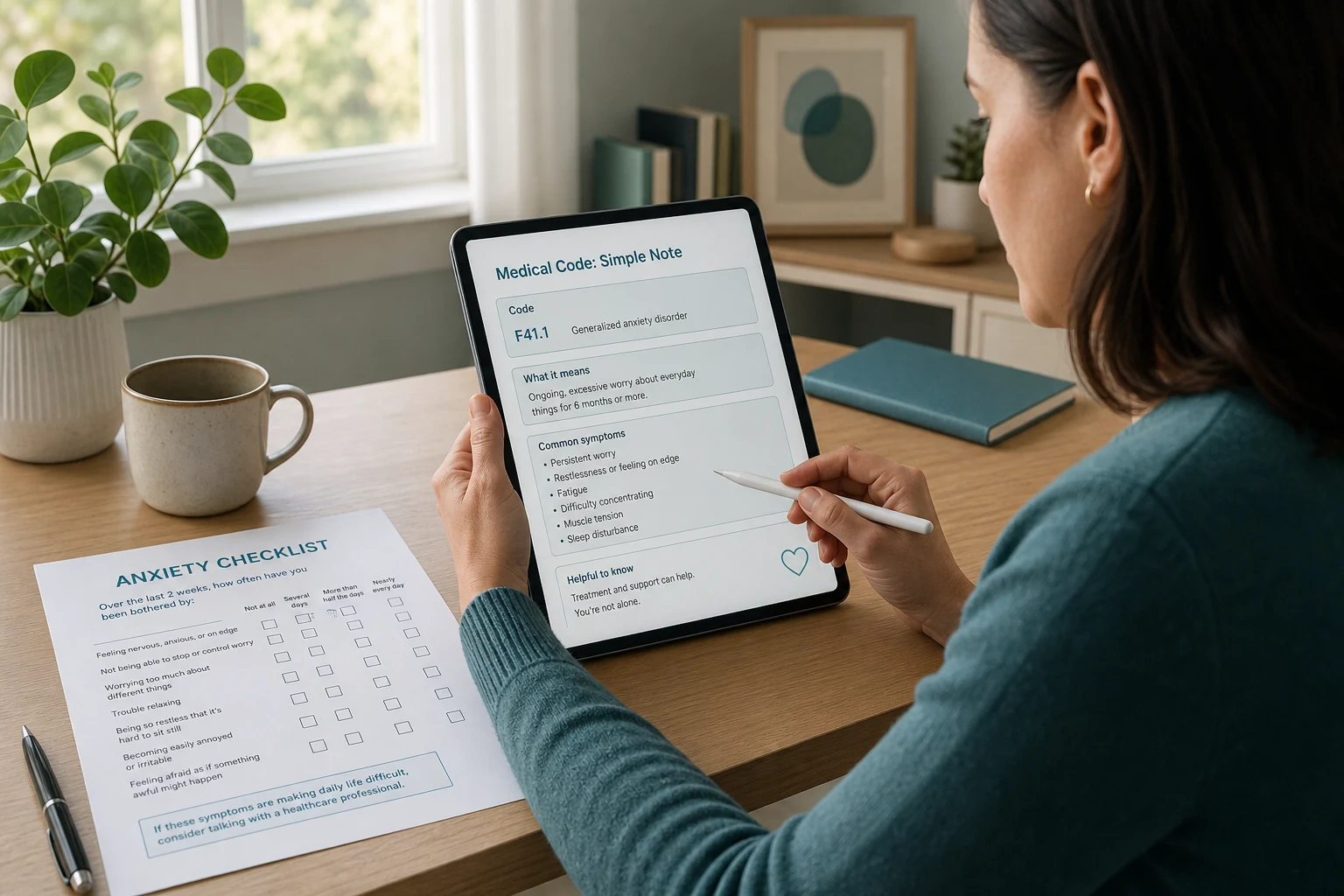
What F411 Means in ICD-10-CM
F411 is the no-decimal version of F41.1. In the U.S. ICD-10-CM system, F41.1 is listed as generalized anxiety disorder. The broader F41 category covers other anxiety disorders, including panic disorder and unspecified anxiety disorder. The decimal matters for readability, but many billing and data systems remove punctuation, so F41.1 and F411 often refer to the same coded concept.
The f411 diagnosis code description is short on purpose. Coding systems are built for classification, not storytelling. The label tells a clinician, insurer, or records system which recognized condition is being referenced, but it does not explain a person's full experience, history, triggers, strengths, or next steps. Those details belong in a clinical note and in a supportive conversation.
Generalized anxiety disorder is usually associated with persistent, excessive worry that is difficult to control and not limited to one narrow fear. It may show up with restlessness, fatigue, trouble concentrating, irritability, muscle tension, or sleep problems. The key idea is not "normal worry versus abnormal worry" in a judgmental sense; it is whether worry becomes persistent enough to interfere with daily life and deserves careful evaluation.
Why People Search for a F411 DX Code
People search for "f411 dx code" or "f411 diag code" for several practical reasons. You may have seen the code on an insurance explanation of benefits, an appointment summary, a therapy invoice, a school or workplace form, or an electronic patient portal. You may also be comparing it with a GAD-7 score after a screening.
In plain English, the code is a documentation shorthand. It can help health professionals communicate consistently, connect services with clinical records, and support insurance processing. It does not reveal everything about you, and it should not be used by itself to decide what care you need.
This distinction can be reassuring. A code is not a personal identity. It is one part of a structured record. If the code surprised you, the most useful next step is often to ask the professional who assigned or recorded it what symptoms, history, and criteria supported that choice.
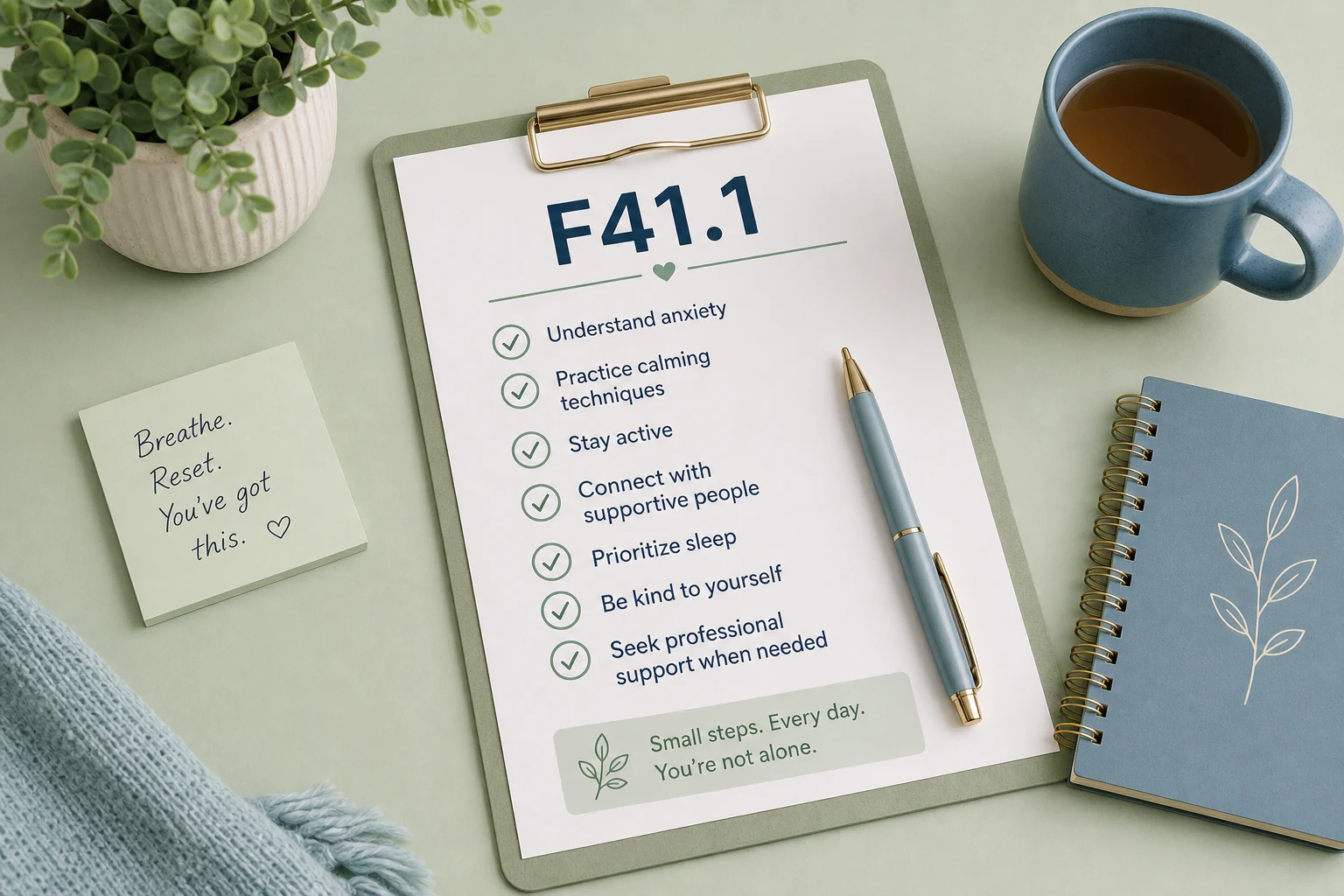
F41.1, F41.9, F06.4, and Related Codes
The related searches around this topic often include F41.9, F43.1, F41.2, F33.1, F33.0, and F40.11. These are not interchangeable. They sit near each other in the mental and behavioral health coding world, but they describe different clinical categories.
F41.1 refers to generalized anxiety disorder. F41.9 is anxiety disorder, unspecified, often used when anxiety is present but the record does not support a more specific anxiety code. F41.0 refers to panic disorder. F40.11 refers to generalized social phobia in ICD-10-CM. F43.1 codes relate to post-traumatic stress disorder. F33.0 and F33.1 relate to recurrent major depressive disorder, not anxiety. F06.4 is anxiety disorder due to a known physiological condition, which means anxiety is connected to a medical condition in the documentation.
Some searchers ask about "diagnosis code for depression screening." That is a different question. Depression screening, symptoms, and coding often involve PHQ-9 results and depression-related ICD-10-CM codes, while anxiety screening often involves tools such as GAD-7 and anxiety-related codes. A screening score can inform a conversation, but the billing or records code is based on a professional assessment and documentation.
If you are comparing F41.1 with other psychiatric dx codes, focus on three questions: What main symptom pattern was recorded? How long has it been present? Is the anxiety better explained by panic attacks, trauma exposure, a medical condition, depression, substance use, or another factor? These questions belong with a clinician, but they can help you ask clearer, calmer questions.
How the F411 Diagnosis Code Relates to the GAD-7
The GAD-7 is a seven-question screening tool that asks how often anxiety-related symptoms have bothered someone over the past two weeks. It produces a score from 0 to 21 and is often used to estimate symptom severity. GAD-7.org focuses on this type of educational self-assessment: quick, private, and designed to help people reflect on what they are experiencing.
F41.1 is different. It is a clinical classification code for generalized anxiety disorder. A GAD-7 score can support a broader picture, but it does not automatically create an F41.1 code. Likewise, seeing F411 in a record does not tell you what your current GAD-7 score would be today.
The useful bridge is reflection. If you saw the f411 diagnosis code and want to understand whether your current symptoms feel mild, moderate, or more disruptive, the GAD-7 online screening tool can give you a structured snapshot. Bring that result to a healthcare professional if you want help interpreting it in context.
Is F411 a CPT Code?
No. F411 is not a CPT code. This is one of the most common points of confusion in search data. ICD-10-CM codes and CPT codes answer different questions.
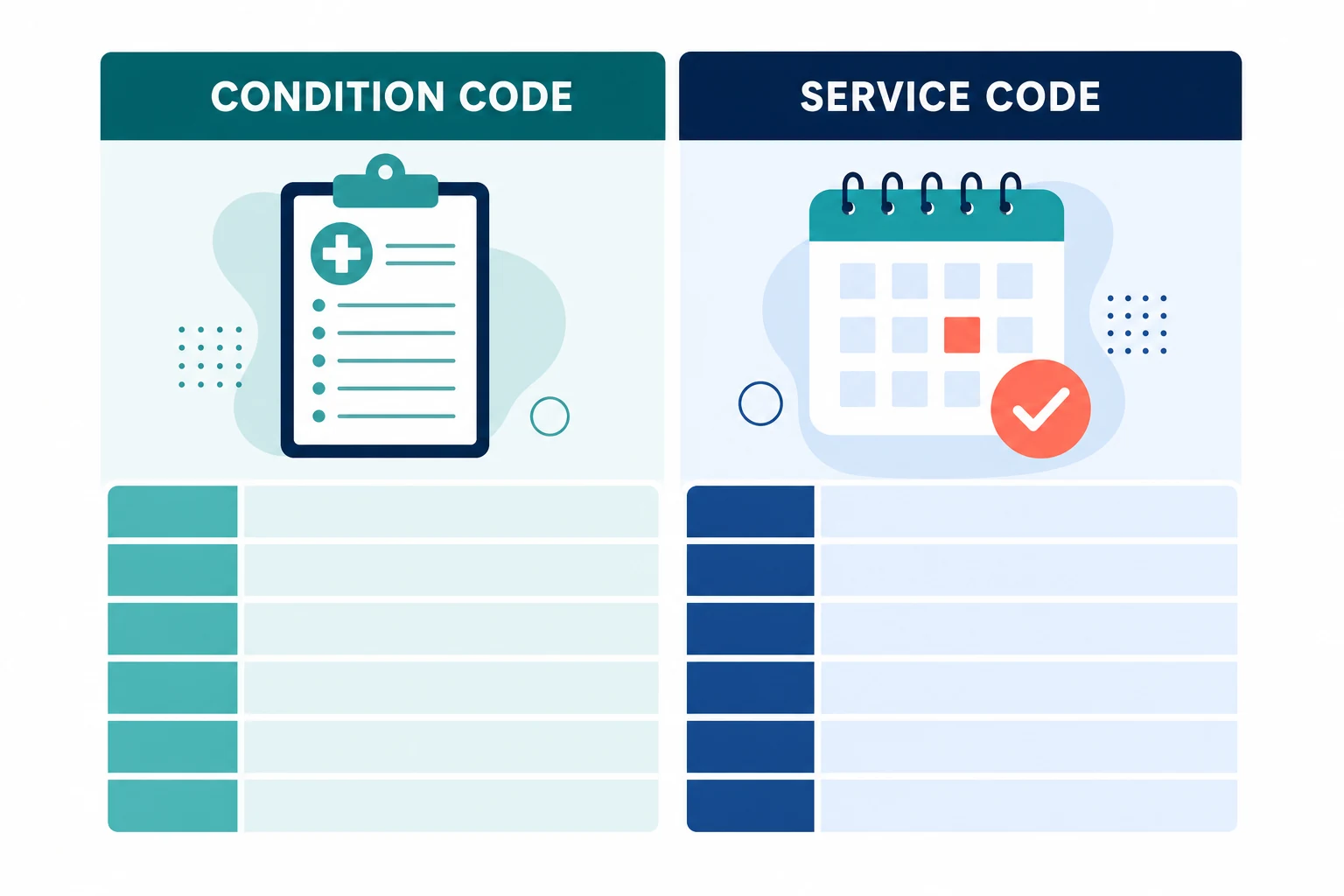
An ICD-10-CM code describes a health condition or reason for care. F41.1 describes generalized anxiety disorder. A CPT code describes a service or procedure, such as a clinical evaluation, psychotherapy session, or brief behavioral assessment. In a claim or record, both types of codes may appear near each other, but they do different jobs.
For a general reader, the practical takeaway is simple: if you see F411 or F41.1, you are looking at a condition code, not the code for the visit itself. If you are reviewing a bill and something seems unclear, ask the office or insurer which part is the condition code and which part represents the service.
How Serious Is Generalized Anxiety Disorder?
Generalized anxiety disorder can range from manageable to highly disruptive. Some people continue working, studying, parenting, and socializing while quietly carrying constant worry. Others find that anxiety affects sleep, concentration, relationships, physical comfort, and everyday decision-making.
Seriousness is not only about the code. It is about duration, intensity, functional impact, safety, co-occurring depression or substance use, medical factors, and whether symptoms are getting better or worse. A high screening score or a persistent pattern of anxiety is a reason to seek support, not a reason to panic.
If sudden anxiety spikes are new, intense, or accompanied by chest pain, fainting, severe shortness of breath, thoughts of self-harm, or a sense that you may not be safe, treat that as urgent and contact emergency services or a local crisis resource. If symptoms are uncomfortable but not urgent, schedule time with a healthcare professional, therapist, or other qualified mental health provider.
What to Ask if You See F411 in Your Records
Seeing an unfamiliar code can feel oddly impersonal. A short list of questions can turn it back into a human conversation:
- What does F41.1 mean in my specific record?
- What symptoms or history led to this code being used?
- Is this code active, historical, provisional, or only listed for administrative reasons?
- Are there related concerns, such as panic symptoms, trauma stress, depression, or a medical condition, that should be reviewed?
- Would a GAD-7 score, symptom diary, or follow-up appointment help clarify the picture?
You do not need to argue with a code to ask about it. It is reasonable to want plain-language context. It is also reasonable to ask how your record can be updated if something is incomplete or no longer accurate.
Using F411 Information as a Next Step, Not a Label
The best use of f411 diagnosis code information is practical and gentle: understand what the code points to, separate it from a screening score, and decide what conversation would help you next. If you are simply curious, write down the code, the date you saw it, and any symptoms you want to discuss. If you are worried about your anxiety level, use a structured self-check and bring the result to someone qualified.
GAD-7.org can support that first reflection. You can review your recent symptoms with a confidential GAD-7 score guide and use the result as an educational note, not a final answer. The code may belong in a medical record, but your experience is broader than the code. Good care starts with the full picture.

FAQ
What does diagnosis F41-1 mean?
F41-1 is usually a punctuation variation of F41.1, the ICD-10-CM code for generalized anxiety disorder. In many systems it may appear as F411 without the decimal. The meaning is generally the same, but the context of your own record should be explained by the professional or organization that created it.
Is F411 the same as F41.1?
In most U.S. medical coding contexts, yes. F411 is commonly the compact format for F41.1. The decimal is often removed in databases, claim files, or portals. When writing for people, F41.1 is easier to read.
Is F411 the same as anxiety disorder unspecified?
No. F41.1 refers to generalized anxiety disorder. Anxiety disorder, unspecified is F41.9. F41.9 may be used when anxiety is present but the record does not support a more specific anxiety category.
Can a GAD-7 score create an F41.1 code?
No. A GAD-7 score is a screening result, while F41.1 is a clinical classification code. A screening result may help a professional understand symptom severity, but it does not replace a full evaluation.
Is F411 a CPT code?
No. F411 or F41.1 is an ICD-10-CM condition code. CPT codes describe services, such as an evaluation or therapy visit. The two code types may appear together on paperwork, but they are not the same.
What is anxiety disorder caused by a known physiological condition?
In ICD-10-CM, anxiety disorder due to a known physiological condition is generally represented by F06.4. It is used when documentation connects anxiety symptoms to a medical condition. That is different from F41.1, which refers to generalized anxiety disorder.
What could be causing sudden anxiety spikes?
Sudden anxiety spikes can have many possible contributors, including stress, sleep loss, caffeine, panic symptoms, trauma reminders, medication effects, substance use, medical conditions, or life changes. If spikes are severe, new, or come with concerning physical symptoms, seek medical support promptly.