GAD-7 Chinese: Free Online Test & Score Guide
Feeling worried, restless, or on edge? Ever felt that knot in your stomach and wished you could put a name to it in your own language? You're not alone, and looking for clarity is a sign of strength. The GAD-7 (Generalized Anxiety Disorder 7-item scale) is a trusted tool used worldwide to screen for anxiety. We offer it here in Simplified Chinese, completely free and online.
This guide will walk you through our GAD-7 Simplified Chinese online test. We'll help you understand what your score means and provide culturally relevant insights into managing anxiety. Our goal is to empower you with knowledge so you can decide your next steps with confidence.
Ready to understand your feelings better? You can take our confidential and free online GAD-7 test in just a few minutes. It's a simple, private way to check in with yourself.
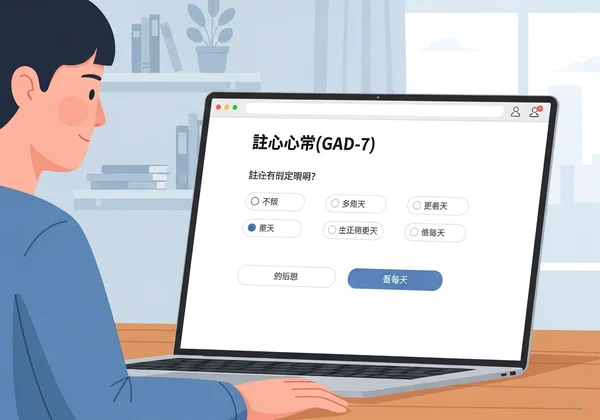
Take Your GAD-7 Simplified Chinese Online Test
Taking an anxiety assessment should be simple, private, and accessible. Our platform is designed with these principles in mind, offering the GAD-7 screening tool in Simplified Chinese to help you get the initial clarity you need.
Why Choose Our Free Online GAD-7 Chinese Assessment?
When you’re feeling anxious, the last thing you need is a complicated process. Our GAD-7 Chinese assessment is designed to be a supportive starting point. Here’s why so many people trust our tool:
- Completely Free and Confidential: There are no fees or hidden charges. Your privacy is our priority; your responses are anonymous and secure.
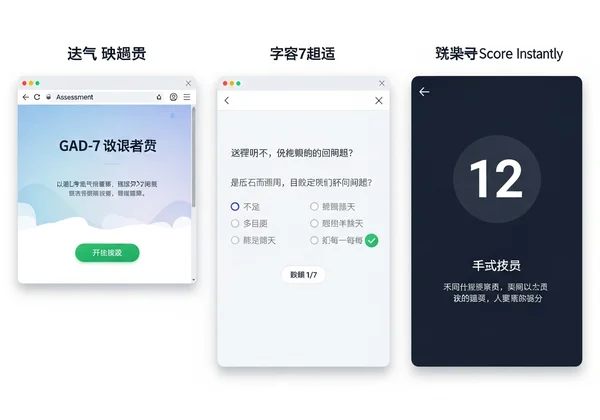
- Instant, Clear Results: You don’t have to wait. As soon as you answer the seven questions, your score is calculated and explained immediately.
- Scientifically Validated: We use the standard, globally recognized GAD-7 scale developed by Spitzer et al. It is a reliable screening tool used by healthcare professionals everywhere.
- Available in Simplified Chinese: The questions are professionally translated to ensure they are clear, culturally appropriate, and easy to understand for native speakers.
- Optional AI-Powered Insights: Unlike other sites that only give you a number, we offer a unique, optional AI report. This report can provide personalized insights into your results, helping you understand your patterns and potential next steps.
How to Start Your GAD-7 Chinese Test
Getting started is easy and takes less than three minutes. You can do it from your computer or phone, whenever you feel ready.
-
Visit the Assessment Page: Go to our homepage to start your test. The site supports over 15 languages, including Simplified Chinese.
-
Answer the 7 Questions: The test asks you to reflect on how often you have been bothered by certain feelings or thoughts over the last two weeks. Answer honestly based on your experience.
-
Receive Your Score Instantly: Your total score, from 0 to 21, will be displayed immediately after you finish. You will also see a standard interpretation of what that score suggests.
-
Consider the AI Report: After seeing your score, you’ll have the option to answer a few more background questions to receive a detailed, personalized AI analysis for deeper insights.
Understanding Your GAD-7 Chinese Score Meaning
Your score? It's more than a number—it's a window into how you're feeling. Once you get your score, the next step is interpretation. The GAD-7 helps categorize anxiety symptoms into different levels of severity.
GAD-7 Score Interpretation in a Chinese Context
The GAD-7 scoring is universal, but how we experience and talk about anxiety can be shaped by our culture. Here are the standard score ranges, along with some context relevant for Chinese speakers.
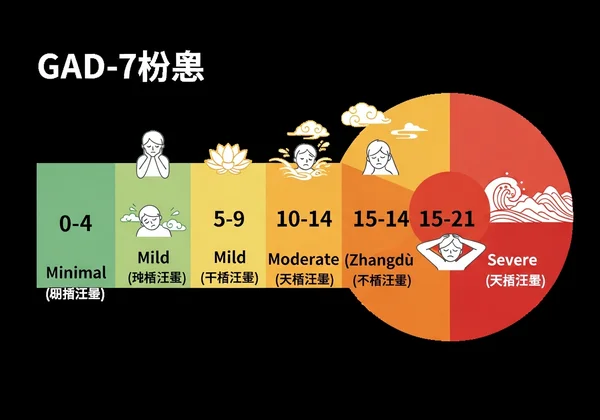
- 0-4: Minimal Anxiety. A score in this range suggests you are likely experiencing few, if any, anxiety symptoms.
- 5-9: Mild Anxiety. This score suggests the presence of mild anxiety symptoms. These feelings might be noticeable but may not significantly interfere with your daily life.
- 10-14: Moderate Anxiety. Symptoms at this level are more persistent and may be starting to impact your work, studies, or social life. This is a crucial point to consider taking action.
- 15-21: Severe Anxiety. A score in this range indicates significant and frequent anxiety symptoms that are likely causing considerable distress and impairment in daily functioning.
In Chinese culture, anxiety often shows up physically—like headaches or fatigue—instead of just worry. The GAD-7 catches both.
Navigating Cultural Nuances of Anxiety in China
Understanding cultural views on mental health is key to interpreting your GAD-7 results. In many Chinese communities, there can be a strong emphasis on resilience and collectivism. Sometimes, openly discussing feelings of worry or stress can be seen as a sign of weakness or may be considered a private family matter.
Because of this, you might feel hesitant to talk about your anxiety. You might even downplay your feelings when answering the questions. Remember, this assessment is for you. It is a private tool to help you understand your own experience without judgment. Recognizing these feelings isn't a weakness; it's a key starting point for managing your well-being.
Your Next Steps After the GAD-7 Chinese Assessment
Getting your GAD-7 score is a great kickoff. Now, let's talk about what truly matters: what you do next. This score is a piece of information—a starting point for a journey toward better well-being.
Is the GAD-7 a Diagnosis? Clarifying Its Role
This is a critical point: The GAD-7 is a screening tool, not a diagnostic tool. It cannot tell you if you have an anxiety disorder. Only a qualified healthcare professional, like a doctor, psychiatrist, or psychologist, can provide a formal diagnosis.
Picture the GAD-7 as a thermometer. It spots a fever (your anxiety level). But only a doctor explains why. Similarly, the GAD-7 can indicate the presence and severity of anxiety symptoms, but it can’t explain the underlying cause or provide a clinical diagnosis. It's a helpful tool to start a conversation with a professional. You can begin the assessment anytime to gather this information for yourself.
Actionable Advice: What to Do After Your GAD-7 Score
Your score can guide your next steps. Here is some general advice based on the different score ranges:
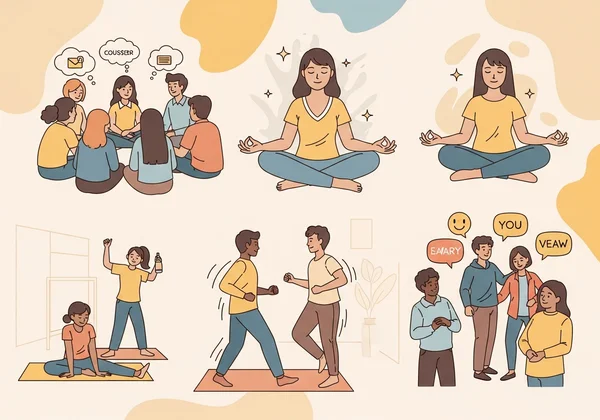
- If your score is mild (5-9): You might benefit from self-care strategies. Consider activities like regular exercise, mindfulness meditation, ensuring you get enough sleep, and talking with trusted friends or family. Observe your feelings and consider re-taking the assessment in a few weeks to see if there are any changes.
- If your score is moderate (10-14): This is a good time to consider professional help. The symptoms are likely affecting your quality of life. In addition to self-care, scheduling an appointment with a doctor or counselor is a proactive and positive step.
- If your score is severe (15-21): We strongly recommend seeking professional support as soon as possible. A doctor or mental health professional can help you understand what you're experiencing and create a treatment plan that works for you. You do not have to manage these feelings alone.
Want more? After the test, grab our free AI report. It digs into your answers for custom tips and insights.
Finding Support: Resources for Anxiety in China
Finding mental health support is becoming easier. Many cities in China have counseling centers, and online therapy platforms are growing in popularity, offering services in Mandarin and other dialects. Universities often have student counseling services, and many hospitals have psychology or psychiatry departments.
When seeking help, look for licensed professionals. Don't be afraid to ask about their experience and approach to ensure they are a good fit for you.
Empowering Your Path Forward: Understanding Anxiety in Chinese
Understanding your anxiety is the beginning of managing it. The GAD-7 is a powerful, simple tool that provides a clear snapshot of your current emotional state in a way that is private, fast, and easy to understand. By offering this assessment in Simplified Chinese, we hope to make this crucial step accessible to you.
Your score isn't a judgment—it's just info to light your way forward. Whether it leads you to practice more self-care, talk with a loved one, or seek professional guidance, you are taking control.
Take control today. Begin your confidential GAD-7 assessment and gain the clarity you deserve.
Frequently Asked Questions About GAD-7 in Chinese
What is the GAD-7 Test, and Why is it Used?
The GAD-7 is a seven-question self-report questionnaire used as a screening tool for Generalized Anxiety Disorder (GAD). It is also effective for screening for panic disorder, social anxiety, and PTSD. Healthcare pros love the GAD-7. It's quick and reliable. It clearly shows how severe your anxiety symptoms have been over the past two weeks.
How Accurate is the GAD-7 Test for Chinese Speakers?
Absolutely. The GAD-7 has been professionally translated and validated for Chinese speakers. Studies confirm it's a reliable screening tool. While it's very accurate, remember that culture can shape how we express feelings. So, it's best to use your score as a starting point for self-reflection or a chat with a pro. Curious? You can try our free tool to see for yourself.
Can the GAD-7 Be Used for Children or Teens in China?
The GAD-7 is built for adults. While it's sometimes used for older teens (16+), it's not ideal for younger kids. If you're worried about a child or teenager, it's best to talk to a pediatrician or school counselor. They can point you to tests designed specifically for them.
How Can I Discuss My GAD-7 Results with a Doctor or Counselor in China?
It's a great idea. Just tell them, "I took the GAD-7 online anxiety screen and my score was [your score]. I've been feeling [your symptoms], and I wanted to discuss it." This gives them a clear starting point. It shows you're proactive and helps them understand what's going on faster.