How to Stop the Worry Cycle and Calm Anxious Thoughts
Worry can feel strangely productive. Your mind keeps replaying what could go wrong, hoping that one more round of thinking will finally make you feel safe. If you are searching for how to stop the worry, the goal is not to force every anxious thought away. A more realistic goal is to notice the worry cycle, calm your body enough to think clearly, and choose one small next step. If worry has been frequent over the past two weeks, a private anxiety self-assessment tool can also give you a structured way to reflect on your symptoms. This article is educational and cannot replace care from a qualified health professional.

Why Worry Feels Hard to Stop
Worry often starts as a protection strategy. Your brain notices uncertainty and tries to reduce risk by rehearsing possibilities: What if I make a mistake? What if the symptoms mean something serious? What if the future turns out badly? For a moment, thinking can feel like control.
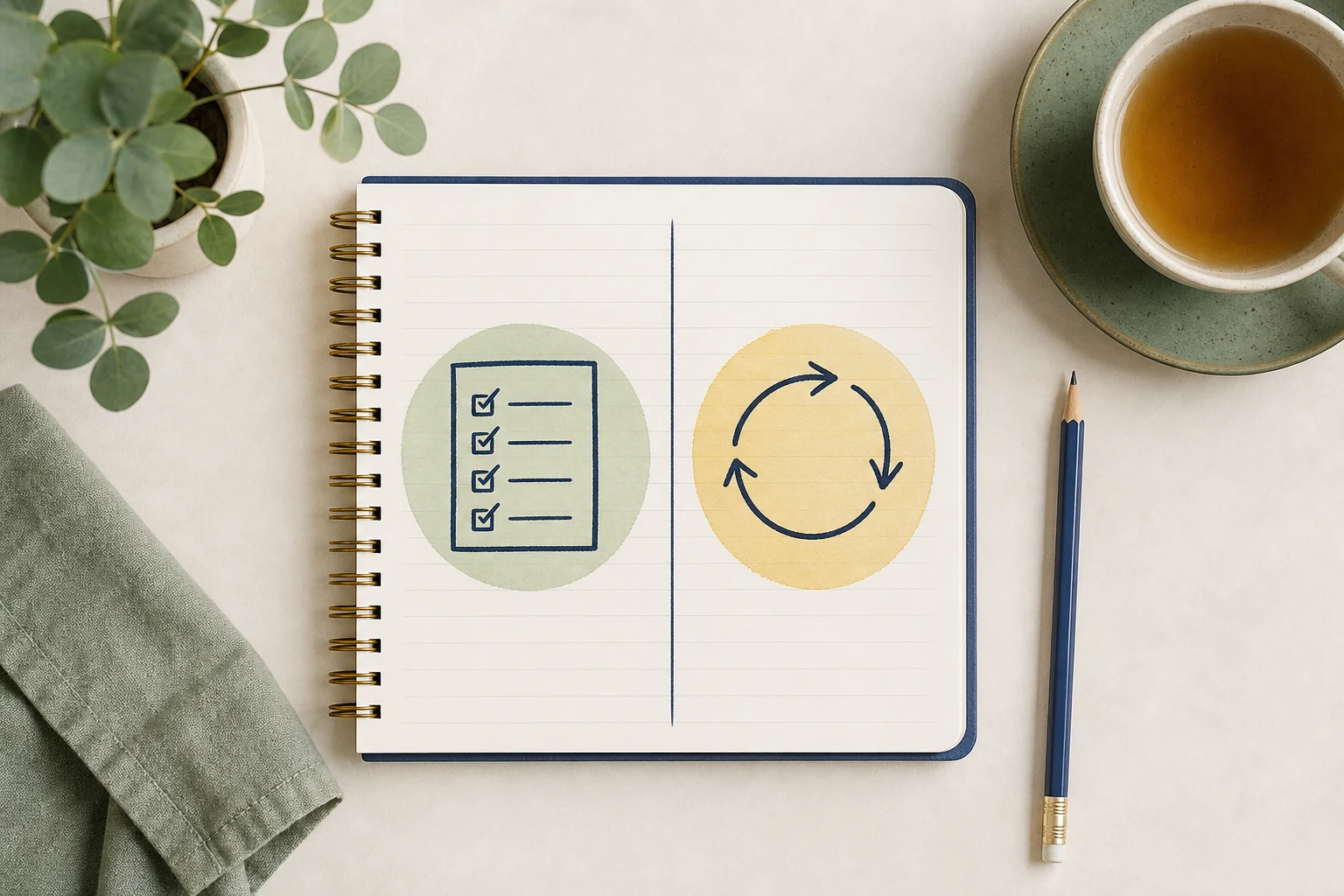
The problem is that worry is usually about an uncertain future, not a task you can complete right now. When the thought does not lead to a clear action, the mind may restart the same loop. The loop can look like this:
- A trigger appears, such as a message, a bill, a body sensation, or a memory.
- The mind creates a future threat.
- The body reacts with tension, restlessness, or a racing heart.
- The discomfort makes the worry feel urgent.
- More mental rehearsal follows, but relief does not last.
This does not mean you are weak or doing anxiety wrong. It means your nervous system has learned a pattern that needs a different response. Instead of asking, "How do I erase this thought?" try asking, "What is this worry asking me to do, and is there a real action available?"
Separate Solvable Worries From Mental Loops
One of the most useful ways to reduce anxiety immediately is to sort worry into two groups: solvable worries and looping worries.
A solvable worry points to a practical task. If you are worried about missing a deadline, the next step might be to send an update, make a list, or block 30 minutes for the first part of the work. If you are worried about a health concern, the next step might be to write down symptoms and contact a clinician or local health service for guidance.
A looping worry is different. It asks for certainty that no one can fully provide: Will everything be okay? What if I never feel better? What if something unexpected happens? These questions can sound important, but they often pull you into more checking, reassurance seeking, or rumination.
Try this three-question filter:
- Is there a specific problem in front of me?
- Is there one action I can take in the next 10 minutes?
- Would another round of thinking give me new information, or just more tension?
If there is a clear action, take the smallest version of it. If there is no clear action, label the thought: "This is a worry loop." Naming it is not magic, but it creates a pause between the thought and your reaction.
How to Reduce Anxiety Immediately at Home
When worry has already activated your body, reasoning alone may not be enough. Start with your nervous system first. These steps are safe for many people, but adjust them for your body and seek urgent help if you have severe, unusual, or frightening physical symptoms.
First, lengthen your exhale. Breathe in gently through your nose for about four counts, then breathe out slowly for six to eight counts. Repeat for one to three minutes. The exact number matters less than making the out-breath slower than the in-breath.
Second, use the 3 3 3 rule for anxiety. Name three things you can see, three sounds you can hear, and move three parts of your body, such as your shoulders, hands, and feet. This does not solve the original worry, but it shifts attention back toward the present moment.
Third, unclench the places worry hides. Drop your shoulders. Let your jaw loosen. Press both feet into the floor. If you can, stand up and walk slowly for a minute. Movement tells your body that it does not need to stay frozen in threat mode.
Fourth, reduce the input. If worry is being fed by news, social media, late-night searching, or repeated checking, create a short boundary. Put the phone across the room for 15 minutes. Turn off autoplay. Choose one reliable update window instead of refreshing all day.
These steps are not meant to prove that nothing bad can happen. They help you get enough steadiness to decide what is useful next.
How to Deal With Anxiety When Alone
Being alone can make worry louder because there is no outside conversation to interrupt it. The aim is to create a simple support structure before your mind starts negotiating with every anxious thought.
Begin with an "alone plan" you can use repeatedly:
- Put your body somewhere steady: sit with your back supported or stand with both feet grounded.
- Say what is happening in plain language: "I am having a worry spike. It feels intense, but it is a state that can pass."
- Choose one low-effort anchor: a glass of water, a shower, a short walk, or a familiar calming playlist.
- Send one neutral message if connection would help: "I am having a tough anxiety moment. No need to fix it, but could you check in later?"
If you are alone at night, keep the plan even smaller. Night worry often grows because the world is quiet and problem-solving resources are lower. Instead of solving your whole future at 2 a.m., write one sentence: "The topic my mind wants to solve is..." Then write: "The next reasonable time to review this is..." Put the note aside and return to a calming routine.
If being alone brings thoughts of self-harm, feeling unsafe, or being unable to get through the next few minutes, treat that as a signal to reach immediate human support through local emergency services, a crisis line, or someone nearby.
How to Calm an Anxiety Attack Without Feeding the Loop
People often use "anxiety attack" to describe a strong surge of fear, body symptoms, or overwhelm. Some people also use "panic attack" for sudden intense fear that peaks quickly. The exact label matters less in the moment than responding safely and avoiding the spiral of fearing the sensations themselves.
Start by orienting. Look around and name where you are, what day it is, and one ordinary object near you. Then soften your breathing without forcing a perfect pattern. If deep breathing makes you feel worse, breathe normally and focus on a longer, easier exhale.
Next, use a body-based statement: "This is a wave of anxiety in my body. I do not need to solve every thought while the wave is high." This kind of wording keeps you from debating every what-if while your system is activated.
Then choose one non-dramatic action. Sit on the floor with your back against a wall. Hold something cool. Step outside for fresh air if it is safe. Keep the action simple enough that you can do it even while anxious.
After the wave passes, avoid turning recovery into an investigation that lasts for hours. A brief note can be enough: What was happening before it started? What helped even 5 percent? What would I like to try next time? If these episodes are new, frequent, or affecting daily life, it is reasonable to discuss them with a healthcare professional.

Use a Five-Minute Worry Reset
When you notice repetitive worry, try this compact reset. It combines awareness, body calming, and one practical decision.
Minute 1: Map the trigger. Write one sentence: "My mind is worrying about..." Keep it specific. "Everything" is too big; "tomorrow's meeting" is workable.
Minute 2: Notice the body. Scan your face, throat, chest, stomach, shoulders, and hands. You are not trying to like the sensations. You are gathering information without adding a second layer of fear.
Minute 3: Test usefulness. Ask, "Is this worry helping me prepare, or is it repeating?" If it is helping, define the next action. If it is repeating, label it as a loop.
Minute 4: Do one grounding action. Longer exhale, feet on the floor, stretch, water, or a slow walk. Pick one, not six.
Minute 5: Choose the next container. That might be a calendar reminder, a short task, a conversation, or a decision to revisit the topic tomorrow. The point is to stop asking your mind to hold an open tab all day.
This reset can also help with how to calm anxiety attack at night because it keeps the plan concrete. At night, make the writing brief and avoid screens if they wake you further.
Foods, Sleep, and Habits That Support a Calmer Baseline
Searches for foods that reduce anxiety fast are common, but food usually works as support, not as an instant switch. A balanced snack can help if worry is intensified by hunger, caffeine, or a blood sugar dip. Consider steady options such as yogurt, nuts, eggs, whole-grain toast, fruit, or soup. Hydration helps too.
Be cautious with caffeine, especially later in the day. For some people, caffeine can mimic anxiety sensations: jitteriness, a faster heartbeat, or restlessness. Alcohol may feel calming at first but can worsen sleep and next-day anxiety for many people.
Sleep is another baseline factor. Worry becomes more convincing when you are exhausted. A simple wind-down routine, a consistent wake time, and a place to write tomorrow's concerns can reduce the feeling that bedtime is the only time available for thinking.
Movement does not have to be intense. A 10-minute walk, gentle stretching, or light household activity can discharge some stress energy and make the body feel less trapped. These habits will not remove every worry, but they make the worry cycle less powerful.
When Worry May Need More Support
It is common to worry during stress, change, grief, health uncertainty, relationship conflict, or financial pressure. Extra support may be helpful when worry feels hard to control most days, disrupts sleep, affects work or relationships, causes repeated physical tension, or leads you to avoid ordinary activities.
This is where structured reflection can help. The GAD-7 is a brief screening questionnaire about anxiety symptoms over the past two weeks. It does not replace professional evaluation, but it can help you describe patterns more clearly. You can use the private GAD-7 screening experience as one educational data point, then share your concerns with a qualified professional if symptoms are persistent, intense, or worrying you.
Also pay attention to context. If worry centers on trauma, substance use, medical symptoms, pregnancy or postpartum changes, or thoughts of self-harm, self-help alone may not be the right level of support. Reaching out is not overreacting; it is a practical way to stop carrying the whole situation by yourself.
Turn Worry Into One Next Step
Learning how to stop the worry does not mean becoming a person who never worries. It means recognizing the difference between useful preparation and a mental loop that keeps asking for impossible certainty. Start with your body, sort the worry, take one small action when action is available, and practice leaving unsolvable thoughts alone for a while.
If you want a calm way to reflect on recent anxiety symptoms, the confidential anxiety score guide can help you organize what you have been experiencing without turning the result into a label. Bring curiosity, not judgment. A score, a note, or a five-minute reset is only one piece of information, but sometimes one clear piece is enough to make the next step feel less blurry.

FAQ
What is the 3 3 3 rule for anxiety?
The 3 3 3 rule is a grounding exercise. You name three things you can see, three sounds you can hear, and move three parts of your body. It helps bring attention back to the present when worry is pulling you into future-focused what-if thoughts.
How do I stop worrying that things will go wrong?
Start by asking whether there is a specific action you can take. If yes, take the smallest practical step. If not, label the thought as a worry loop, calm your body, and postpone deeper review until a planned time. The aim is not perfect certainty; it is less time spent rehearsing outcomes you cannot fully control.
How does worry affect the body?
Worry can keep the body in a stress response. You may notice tight muscles, stomach discomfort, shallow breathing, restlessness, fatigue, headaches, or trouble sleeping. These symptoms can also have other causes, so new, severe, or concerning physical symptoms should be discussed with a healthcare professional.
How do you alleviate worry quickly?
Use a body-first approach: slow the exhale, ground through your feet, name what is happening, and reduce extra input for a few minutes. Then decide whether the worry has a practical next step. If it does not, practice letting it be present without giving it the rest of your evening.
Is an anxiety attack the same as a panic attack?
People use the terms differently. A panic attack often refers to a sudden surge of intense fear with strong body symptoms, while "anxiety attack" is commonly used for a buildup of anxious overwhelm. If episodes are recurring, frightening, or changing, professional guidance can help you understand what is happening.
Why do I worry more at night?
At night there are fewer distractions, the body is tired, and problems can feel larger because there is less you can act on immediately. Keep a brief note beside the bed, write the worry topic and a reasonable review time, then return to a low-stimulation routine.
Can I overcome anxiety with home strategies alone?
Home strategies can support many people, especially for mild or situational worry. But persistent, intense, or life-limiting anxiety deserves more support. Self-help tools, screening questionnaires, therapy, medical care, social support, and lifestyle changes can all play different roles.