Manage Anxiety with CBT: Action Plan for Your GAD7 Score
Just received your GAD7 score and wondering what to do next? Feeling a mix of relief and uncertainty is completely normal. A score isn't a label; it's a starting point—a valuable piece of information that can guide you toward better well-being. This guide is designed to be your next step.
We will explore practical, science-backed strategies from Cognitive Behavioral Therapy (CBT) that can empower you to manage anxiety symptoms. Think of your GAD7 score as the "you are here" marker on a map. CBT provides the tools to help you navigate the road ahead.
Understanding your current anxiety level is the first step toward managing it. If you're looking for a clear, confidential starting point, our free GAD-7 assessment provides instant results to help you begin your journey.

Understanding Your GAD7 Score: A Starting Point for Action
Your GAD7 score is more than just a number. It’s a snapshot of your anxiety symptoms over the last two weeks. Recognizing what this snapshot shows is crucial for creating an effective action plan. It helps you understand the intensity of your symptoms and provides a baseline to measure your progress.
What Your GAD7 Score Ranges Mean for Anxiety Levels
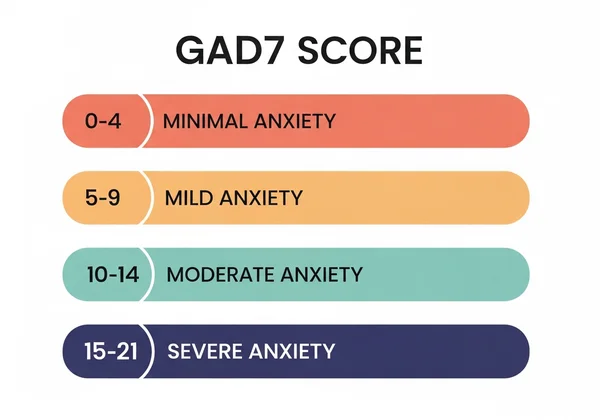
The GAD7 assessment sorts scores into several categories to help you understand what you're experiencing. Here’s a simple breakdown:
- 0-4: Minimal Anxiety. Your symptoms are likely not causing significant disruption.
- 5-9: Mild Anxiety. You may be experiencing some symptoms of anxiety that are manageable.
- 10-14: Moderate Anxiety. Your symptoms are likely noticeable and may be interfering with your daily activities.
- 15-21: Severe Anxiety. At this level, anxiety symptoms are probably causing significant distress and impacting your life.
Important Disclaimer: The GAD7 is a highly effective screening tool, but it is not a diagnosis. Only a qualified healthcare professional, like a doctor or therapist, can provide a formal diagnosis. Think of your score as a conversation starter for that professional discussion.
Why CBT is a Powerful Next Step After Your GAD7 Test
So, why turn to Cognitive Behavioral Therapy (CBT)? Because it works. CBT is one of the most researched and effective forms of therapy for anxiety disorders. It's not about endlessly discussing your past; it's a practical, hands-on approach focused on the present.
CBT centers on one powerful truth: thoughts, feelings, and behaviors are deeply linked. Changing one can reshape the others. By learning to change negative thought patterns and unhelpful behaviors, you can directly influence your feelings of anxiety. It equips you with a toolkit of skills you can use for the rest of your life, turning your GAD7 insights into real, positive change.
Practical CBT Techniques for Effective Anxiety Management
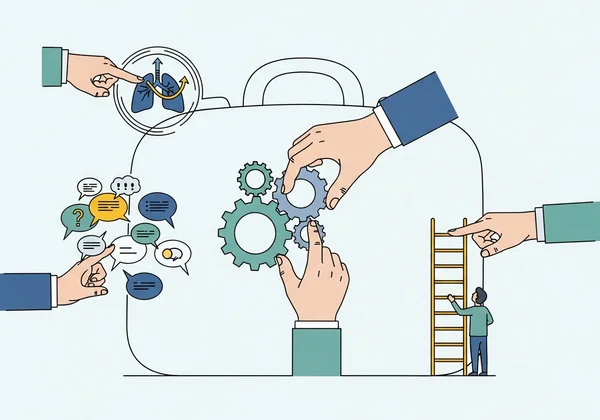
Ready to explore your toolkit? These five CBT techniques are practical, easy to learn, and can be applied anytime you feel anxiety rising. Start by choosing one that resonates with you and practice it regularly.
Challenge Anxious Thoughts: Cognitive Restructuring Steps
Anxiety often stems from thoughts that are exaggerated or untrue, known as "cognitive distortions." Cognitive restructuring helps you identify, challenge, and change these thoughts.
- Catch the Thought: The moment you feel a wave of anxiety, ask yourself: "What am I thinking right now?" Write it down. (e.g., "I'm going to mess up this presentation and everyone will think I'm incompetent.")
- Check the Thought: Look for the evidence. Is this thought 100% true? Are there other possible outcomes? What would you tell a friend who had this thought? (e.g., "I've given good presentations before. Even if I stumble, it doesn't mean I'm incompetent.")
- Change the Thought: Replace the anxious thought with a more balanced and realistic one. (e.g., "I am well-prepared for this presentation. It's normal to be nervous, but I am capable of doing a good job.")
Mindful Breathing & Relaxation: Immediate Calming Techniques
When you feel anxious, your body enters "fight or flight" mode. Your breathing becomes shallow and your heart races. Mindful breathing is a powerful way to send a signal to your brain that it's safe to calm down.
Try the Box Breathing technique:
- Find a quiet place to sit comfortably.
- Breathe in slowly through your nose for a count of four.
- Hold your breath for a count of four.
- Exhale slowly through your mouth for a count of four.
- Hold your breath at the end for a count of four.
- Repeat this cycle 5-10 times, focusing only on the sensation of your breath.
Gradual Exposure: Facing Fears to Reduce Avoidance
Do you avoid situations that make you anxious? While avoidance offers short-term relief, it makes anxiety stronger in the long run. Gradual exposure helps you break this cycle by slowly and safely facing your fears until they no longer control you.
Create an "exposure ladder." Start with something that causes mild anxiety and work your way up. For a fear of social situations, your ladder might look like this:
- Step 1: Text a friend to make plans.
- Step 2: Have a short, 5-minute conversation with a cashier.
- Step 3: Go to a coffee shop by yourself for 30 minutes.
- Step 4: Attend a small gathering with one or two close friends.
Behavioral Activation: Boosting Mood with Meaningful Activities
Anxiety can drain your energy and motivation, leading you to withdraw from activities you once enjoyed. Behavioral activation is about reversing this process. The goal is to schedule positive and meaningful activities back into your life, even if you don't feel like it at first.
- Make a list: Write down activities that give you a sense of pleasure (e.g., listening to music), mastery (e.g., organizing a drawer), or connection (e.g., calling a family member).
- Schedule it: Pick one small activity and put it in your calendar for today or tomorrow.
- Do it: Follow through, regardless of your mood. Action can come before motivation.
Problem-Solving Skills: Proactive Strategies for Worry
Constant worry can feel overwhelming. Problem-solving skills help you turn vague anxieties into concrete problems you can solve.
- Define the Problem: Clearly state what is worrying you. (e.g., "I am worried I won't be able to pay my rent this month.")
- Brainstorm Solutions: Write down every possible solution you can think of, without judgment. (e.g., Pick up extra shifts, sell something online, talk to my landlord, create a budget).
- Choose a Solution: Pick the most practical option to try first.
- Create a Plan: Break the solution down into small, actionable steps.
- Take Action: Do the first step.
Implementing Your GAD7 Action Plan & Seeking Support
Understanding these tools matters, but daily practice creates real change. The key is consistency and self-compassion. This is a journey of small, steady steps.
Creating Your Personalized Anxiety Management Routine
Transforming knowledge into habit requires a plan. Start by choosing just one or two CBT techniques to focus on each week. Schedule 10-15 minutes each day to practice them. This could be doing a breathing exercise in the morning or challenging an anxious thought in the afternoon.
For a deeper, more structured plan based on your unique symptoms, consider using our online GAD-7 tool. After you get your score, you can opt for an AI-powered report that analyzes your specific answers to provide personalized insights and actionable recommendations.

When to Seek Professional Support for Persistent Anxiety
Self-help strategies are incredibly powerful, but sometimes you need more support. Seeking professional help is a sign of strength and a crucial step in taking care of your mental health. Consider speaking with a therapist or doctor if:
- Your anxiety is significantly interfering with your work, relationships, or daily life.
- Your GAD7 score is in the moderate to severe range, and you feel stuck.
- You are experiencing physical symptoms that worry you.
- Self-help techniques are not providing enough relief.
A professional can offer a formal diagnosis, guide you through CBT more deeply, and discuss other treatment options with you.
Your Path Forward: Building Confidence Against Anxiety
Your GAD7 score has given you valuable information. Now, you have a set of proven CBT techniques to turn that information into meaningful action. Remember that living with anxiety isn’t about silencing it forever—it’s about building skills to navigate worry when it shows up.
You have the capacity to change your relationship with anxiety. By practicing these skills, you can build resilience, regain control, and move toward a calmer, more fulfilling life.
Ready to turn insight into a truly personalized action plan? Start your test today and see how our unique AI report can offer deeper guidance tailored specifically to your needs.
FAQ Section
What should I do after getting my GAD7 score?
Your score is a starting point. Use it to understand your current symptom level. A great next step is to explore management techniques like the CBT strategies in this article and consider discussing your results with a healthcare professional. You can see your results instantly with our free tool.
How can I reduce anxiety effectively on my own?
Consistency is key. Practicing evidence-based techniques like cognitive restructuring, mindful breathing, and behavioral activation can significantly reduce anxiety. Start small, be patient with yourself, and track your progress.
Is the GAD7 test a diagnostic tool for anxiety?
No, it is not. The GAD7 is a clinical screening tool designed to identify and measure the severity of anxiety symptoms. A formal diagnosis can only be made by a qualified medical doctor, psychiatrist, or psychologist after a comprehensive evaluation.
What are the GAD7 score ranges for mild, moderate, severe anxiety?
Generally, scores of 5-9 suggest mild anxiety, 10-14 suggest moderate anxiety, and 15-21 suggest severe anxiety. These ranges help you and your doctor understand the impact of your symptoms.
How accurate is the GAD7 test in identifying anxiety symptoms?
The GAD7 is a well-validated and reliable tool used by clinicians worldwide. It has high sensitivity and specificity for identifying symptoms of Generalized Anxiety Disorder and other common anxiety conditions, making it a trustworthy first step. For an accurate measure, you can try our free tool.