Stress and Anxiety Signs, Differences, and Gentle Ways to Cope
Stress and anxiety can feel so similar that it is easy to use the words as if they mean the same thing. Both can tighten your muscles, disturb your sleep, unsettle your stomach, and make ordinary decisions feel harder. Still, the pattern matters: stress is often tied to a visible pressure, while anxiety may linger after the pressure has passed or appear without a clear trigger. If you are trying to understand your symptoms, a private anxiety self-assessment can be one calm starting point, especially when you use it as educational information rather than a final answer about your health.

Stress vs. Anxiety: The Practical Difference
Stress is usually a response to a demand, change, conflict, or responsibility. A crowded inbox, a family argument, a health bill, or an exam can create a stress response because your body is preparing to handle something specific. When the situation resolves, stress often settles too, although chronic stress can keep the body activated for a long time.
Anxiety is more about persistent apprehension, worry, or uneasiness. It may begin with a stressful event, but it can continue even when there is no immediate threat. You might finish the presentation, pass the deadline, or have the conversation, yet your mind keeps scanning for what could go wrong next.
A simple way to reflect is to ask:
| Question | More like stress | More like anxiety |
|---|---|---|
| Can I name the pressure? | Usually yes | Not always |
| Does it ease when the situation changes? | Often | Not reliably |
| Is the worry future-focused and hard to interrupt? | Sometimes | Often |
| Does it interfere with sleep, work, or relationships? | Possible with chronic stress | Common when anxiety is persistent |
This distinction is not about judging your reaction. It is about noticing the pattern so you can choose the next helpful step.
Common Signs of Stress and Anxiety
Stress and anxiety share many symptoms because both involve the body's alert system. You may notice emotional, cognitive, physical, and behavioral changes at the same time.
Common signs include:
- Excessive worry or a sense of uneasiness
- Trouble sleeping or waking up tense
- Muscle tension, headaches, or body aches
- Stomach upset, nausea, diarrhea, or appetite changes
- Dry mouth, sweating, trembling, or a racing heart
- Brain fog, trouble concentrating, or indecision
- Irritability, restlessness, or feeling overwhelmed
- Avoiding tasks, conversations, or places that feel demanding
Five warning signs deserve extra attention: symptoms that are present most days, sleep disruption, avoidance of normal responsibilities, physical discomfort that keeps returning, and worry that feels difficult to control. These signs do not prove anything on their own, but they are useful signals that your body and mind may need more support.
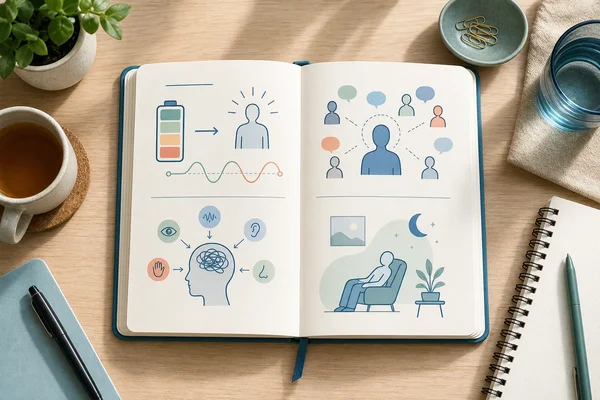
How Stress and Anxiety Affect the Body
The stress response is not imaginary. When your body senses pressure, it can shift attention, breathing, heart rate, digestion, and muscle tone. In the short term, that can help you act. Over time, it can become draining, especially if you rarely get a chance to recover.
This is why stress and anxiety effects on the body can show up in places that do not seem emotional at first. A person may search for explanations for nausea, dry mouth, headaches, brain fog, heart palpitations, or stomach cramps before realizing that pressure and worry are part of the picture. Physical symptoms should be taken seriously, especially if they are new, severe, or changing. A healthcare professional can help rule out medical causes and discuss appropriate support.
It can also help to track patterns. Did symptoms appear after a conflict, caffeine, poor sleep, a demanding work week, or a period of uncertainty? Do they ease after rest, movement, food, or connection? Pairing symptom notes with a GAD-7 screening tool may help you describe your experience more clearly when speaking with a professional.
A Gentle Plan to Manage Stress and Anxiety
Managing stress and anxiety works best when it is small, repeatable, and realistic. A dramatic life overhaul can become another pressure. Instead, build a short menu of actions you can use at different levels of intensity.
1. Name the Trigger or Pattern
Write one sentence: "The pressure I can name is..." If there is no clear trigger, write: "The worry my body is carrying is..." This separates the situation from your reaction and gives you a place to begin.
2. Use a Grounding Reset
The 3-3-3 rule can be a quick grounding practice: notice three things you can see, three sounds you can hear, and move three parts of your body. It is not a magic fix, but it can interrupt spiraling thoughts long enough for your nervous system to catch up with the present moment.
3. Lower the Body's Activation
Try one body-based action before debating with your thoughts. Slow breathing, stretching, a short walk, unclenching your jaw, taking a warm shower, or stepping outside can help signal that you are not in immediate danger.
4. Protect Sleep and Food Rhythms
Lack of sleep can make stress and anxiety feel louder. Aim for a consistent sleep window when possible, reduce late caffeine, and keep regular meals or snacks nearby during demanding days. These basics are not glamorous, but they affect mood regulation.
5. Reduce Avoidance in Small Steps
Avoidance can bring short relief, then make the next attempt feel harder. Choose a tiny version of the avoided task: open the email without answering it, prepare one sentence for a conversation, or spend five minutes organizing the first step.
6. Be Careful With Pills, Supplements, and Quick Fixes
Searches for stress and anxiety pills, herbs, teas, vitamins, or essential oils are common. Some options may interact with medications, health conditions, pregnancy, or sleep. Before using supplements, over-the-counter products, or medication for anxiety and stress, talk with a qualified healthcare professional or pharmacist.

When Stress or Anxiety Needs More Support
You do not need to wait until everything feels unbearable to ask for help. Consider reaching out to a licensed mental health professional, primary care clinician, or trusted support service if stress or anxiety:
- Interferes with work, school, relationships, or daily care
- Keeps returning even after the stressor changes
- Causes frequent sleep problems or physical symptoms
- Leads you to avoid important parts of life
- Comes with panic-like sensations, intense dread, or feeling unsafe
- Involves thoughts of self-harm or immediate danger
If you or someone nearby may be in immediate danger, contact local emergency services or a crisis support line right away. In the United States, calling or texting 988 connects people with the Suicide and Crisis Lifeline.
For non-emergency situations, bring notes rather than perfect explanations. Write down when symptoms began, what you have tried, what helps even a little, and what worries you most. This gives a professional more context and can make the conversation feel less intimidating.
Using Self-Reflection Without Turning It Into Pressure
Stress and anxiety are not personal failures. They are signals, and signals are easier to work with when you can observe them without shame. A brief tool, a journal note, or a conversation with a professional can help you move from "What is wrong with me?" toward "What support would fit this pattern?"
If you want a structured snapshot of anxiety symptoms over the past two weeks, an educational anxiety check-in can help organize what you are noticing. Use the result as a conversation aid, not a label. Your life context, physical health, trauma history, sleep, relationships, and current stressors all matter too.

FAQ
What is the difference between stress and anxiety?
Stress is usually connected to a specific pressure, such as work, school, illness, finances, or conflict. Anxiety may continue after the pressure has passed or appear without a clear trigger. Both can affect the mind and body, and both deserve care when they interfere with daily life.
What are 5 warning signs of stress?
Five useful warning signs are sleep disruption, ongoing irritability or overwhelm, trouble concentrating, physical discomfort such as headaches or stomach problems, and avoiding responsibilities or relationships. If these signs persist, consider talking with a healthcare or mental health professional.
What are 5 symptoms of anxiety?
Anxiety may involve excessive worry, restlessness, muscle tension, sleep problems, and difficulty concentrating. Some people also notice nausea, dry mouth, sweating, trembling, a racing heart, or a sense of dread.
How can you manage stress and anxiety day to day?
Start with small repeatable actions: name the pattern, take slow breaths, move your body, protect sleep, eat regularly, reduce caffeine if it worsens symptoms, talk with someone you trust, and take tiny steps toward avoided tasks.
What is the 3-3-3 rule of anxiety?
The 3-3-3 rule is a grounding exercise. Notice three things you can see, three things you can hear, and move three parts of your body. It can help bring attention back to the present moment during a wave of anxiety.
Can stress and anxiety cause physical symptoms?
Yes. Stress and anxiety can be linked with headaches, body tension, stomach upset, dry mouth, sweating, sleep problems, and changes in appetite. New, severe, or persistent physical symptoms should be discussed with a healthcare professional.
When should I seek professional help for stress and anxiety?
Seek support when symptoms persist, interfere with daily life, affect sleep or relationships, cause avoidance, or feel difficult to manage on your own. If there is immediate danger or thoughts of self-harm, contact emergency help or a crisis line immediately.