Using GAD-7 Results: A Guide to Healthcare Conversations
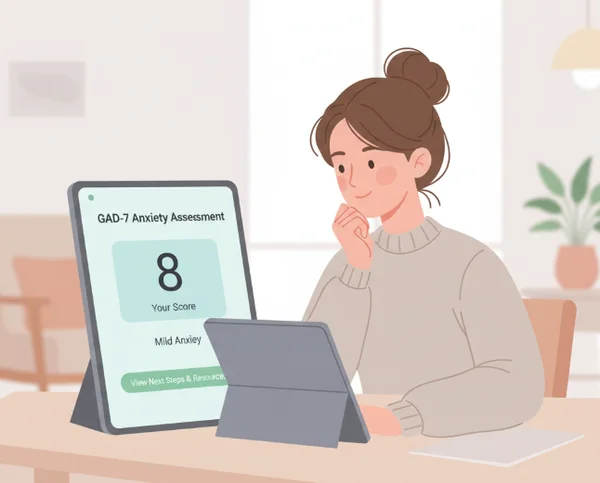
You have taken the first step toward understanding your mental health. You answered the seven questions, looked at your symptoms over the last two weeks, and received a score. But now you might be asking yourself: What do these GAD-7 results actually mean for my next doctor's visit?
Many people feel a mix of relief and confusion after completing an anxiety screening. It is helpful to know where you stand, but it can be hard to know how to bring this information to a professional. This guide helps you turn your GAD-7 score into productive discussions with healthcare providers. If you haven't taken the test yet, you can start your test today to get the data you need.
After reading this guide, you'll approach your healthcare conversations with greater confidence. You will learn how to organize your thoughts, what to ask your doctor, and how to use your results to get the support you deserve.
Understanding the Role of GAD-7 in Healthcare
The GAD-7 (Generalized Anxiety Disorder 7-item scale) is a gold standard in the medical community. The GAD-7 was developed by Dr. Robert L. Spitzer and his colleagues. It's a scientifically validated tool used by doctors, therapists, and researchers worldwide. However, to use it effectively, you must understand its specific role in your healthcare journey.
GAD-7 as a Screening Tool, Not a Diagnosis
It is very important to remember that the GAD-7 is a screening tool, not a final diagnosis. Think of it like a thermometer. A thermometer can tell you that you have a fever, but it cannot tell you exactly why you are sick. Similarly, a high GAD-7 score tells your doctor that anxiety symptoms are present and need attention.
When you use an online GAD-7 test, you are gathering data. A formal diagnosis of Generalized Anxiety Disorder (GAD) requires a clinical interview with a healthcare professional. This is true for most conditions, not just anxiety. They will look at your medical history, physical health, and the duration of your symptoms. Your self-assessment is the "green light" that tells you it is time to have that deeper conversation.
How Healthcare Providers Interpret GAD-7 Scores
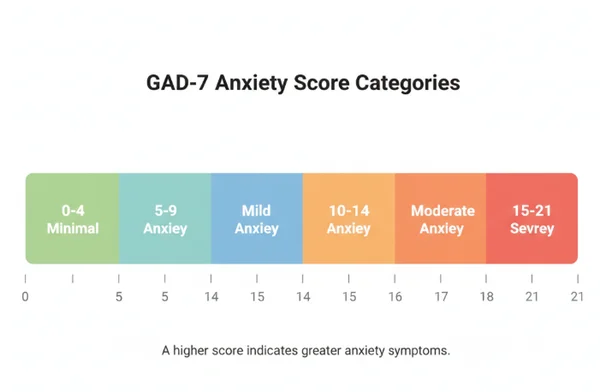
When you hand your results to a doctor, they look at the total score to gauge the intensity of your distress. The scoring is usually broken down into four main categories:
- 0–4: Minimal anxiety. Most providers see this as a healthy range.
- 5–9: Mild anxiety. Your doctor might suggest monitoring your symptoms or looking into lifestyle changes.
- 10–14: Moderate anxiety. This often triggers a discussion about therapy or further evaluation.
- 15–21: Severe anxiety. This level usually indicates that immediate clinical support or intervention is necessary.
Providers don't just look at the number; they look at the specific items you flagged. For example, if you scored a "3" on "trouble relaxing" but a "0" on "feeling afraid as if something awful might happen," it tells them a specific story about how anxiety affects you. You can see your results and get a breakdown of these categories instantly on our platform.
Preparing for Your Healthcare Consultation
Walking into a doctor's office to talk about mental health can feel intimidating. Preparation is the best way to lower that "white coat" anxiety. If you go in with a plan, you are much more likely to get the answers you need.
Organizing Your GAD-7 Results and Symptoms
The first step is to have your results ready. You don't want to rely on your memory during a short 15-minute appointment. We recommend printing your results or having them open on your phone.
Our anxiety screening tool offers a unique advantage here. After you check your symptoms, you can opt for an AI-powered personalized report. This report does more than just give you a number; it analyzes your answers to provide deeper insights into your specific challenges. Bringing a detailed report like this to your doctor gives them a much clearer picture than a simple number would. It shows that you are proactive and well-informed about your own well-being.

Creating a Symptom Journal for More Effective Discussions
While the GAD-7 covers the last two weeks, a symptom journal can provide context. For a few days before your appointment, try to jot down:
- Triggers: What was happening when you felt anxious? (e.g., a work meeting, a noisy environment).
- Physical Feelings: Did you feel a racing heart, sweaty palms, or a tight chest?
- Sleep Patterns: How many hours did you sleep, and was the sleep restful?
- Daily Impact: Did you avoid a social event or struggle to finish a task because of your nerves?
Combining your anxiety assessment results with these real-world examples makes your healthcare consultation much more powerful. It transforms abstract numbers into a lived experience that your doctor can treat.
Communicating Anxiety Symptoms Effectively
The biggest challenge in a mental health consultation is often the "translation" problem. Doctors think in symptoms and criteria; you think in feelings and daily struggles. Learning to bridge this gap is a skill that can improve your care.
Translating Your GAD-7 Score into Everyday Experiences
Instead of just saying, "I scored a 12," try to explain what that 12 looks like in your life. Use the specific questions from the assessment as a guide.
For instance, if you scored high on the question about "not being able to stop or control worrying," you might tell your doctor: "My GAD-7 score shows I struggle with uncontrollable worry. In reality, this means I spend two hours every night thinking about my mistakes at work, which prevents me from sleeping."
This level of detail helps your provider understand the severity and functional impairment of your anxiety. It moves the conversation from "I feel stressed" to "I have a clinical concern that is affecting my quality of life." If you haven't done so yet, get your score to see which areas you should focus on during your talk.

Conversation Starters: How to Begin Discussing Anxiety
Starting the conversation is often the hardest part. You might feel embarrassed or worried that you are wasting the doctor's time. Remember, mental health is just as important as physical health. Here are a few ways to break the ice:
- "I recently took a free GAD-7 test online, and my results indicated moderate anxiety. I’d like to discuss what this means."
- "I’ve been feeling very on edge lately, and I filled out an anxiety screening tool that I’d like you to look at."
- "I’m finding it hard to function at work because of constant worry, and my GAD-7 score was 15. Can we talk about treatment options?"
Using a tool as a starting point takes the pressure off you. You aren't just complaining; you are presenting clinical data for review.
Your Next Steps in the Anxiety Healthcare Journey
Your GAD-7 results are more than just a number; they are the foundation for your recovery. By taking the time to prepare for your doctor's visit, you are taking control of your life.
Keep these three key points in mind:
- Be Honest: Your doctor can only help you if they have the full picture. Don't minimize your symptoms.
- Be Specific: Use your results and your symptom journal to give clear examples.
- Be Patient: Finding the right treatment plan—whether it involves therapy, lifestyle changes, or medication—can take time.
Anxiety can make you feel like you are alone, but the GAD-7 is a reminder that these symptoms are recognized and treatable. Use the resources available to you, and don't hesitate to seek professional help if your score is high or if you are feeling overwhelmed.
The Takeaway
Should I bring my GAD-7 results to my doctor's appointment?
Yes, absolutely. Bringing your results helps your doctor see exactly which symptoms are most bothersome for you. It also saves time during the appointment because the initial screening is already done. You can easily try our free tool and print your summary to bring with you.
How can I discuss my GAD-7 score if I feel anxious about seeing a healthcare provider?
It is very common to feel anxious about discussing anxiety! Try writing down your main points beforehand. You can even hand your printed GAD-7 report to the doctor and say, "I'm a bit nervous to talk about this, but this report explains how I've been feeling." This lets the paper do the heavy lifting for you.
What if my healthcare provider doesn't understand the GAD-7 assessment?
Almost all modern primary care doctors and mental health professionals are familiar with the GAD-7. It is one of the most used tools in the world. However, if they aren't, you can explain that it is a validated screening tool for Generalized Anxiety Disorder. If you feel your concerns are not being heard, it is okay to seek a second opinion from a mental health specialist.
Can GAD-7 results help determine my treatment options?
While the score alone doesn't dictate a specific medication or therapy, it helps categorize the severity of your anxiety. This helps the doctor decide if you might benefit from "watchful waiting," Cognitive Behavioral Therapy (CBT), or other interventions. To get a better idea of your standing, you can start your assessment now.