What Causes Anxiety in the Brain - Chemicals, Circuits, and Stress Signals
Anxiety begins as a protective brain response. Your brain is built to scan for danger, prepare the body for action, and learn from past experience. The problem is not that the brain is broken. Anxiety becomes distressing when the threat system stays switched on too often, reacts too strongly, or has trouble settling after stress has passed.
This guide explains what causes anxiety in the brain without reducing it to a single chemical. Brain chemicals matter, but anxiety also involves brain circuits, stress hormones, memory, sleep, genetics, life experience, and the body. If you want to connect this information with your own recent symptoms, a private GAD-7 self-assessment can offer an educational snapshot. It is not a medical evaluation, but it can help you notice patterns worth discussing with a qualified professional.
The Short Answer: Anxiety Is a Threat-Response Network
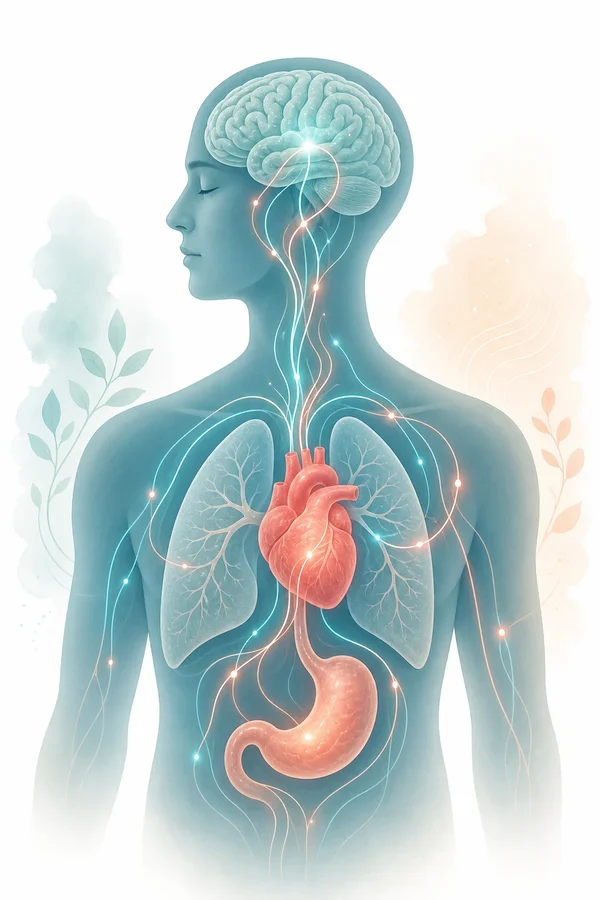
The simplest answer is that anxiety happens when the brain predicts danger and prepares for it. Sometimes that prediction is useful. Before a speech, exam, job interview, medical appointment, or difficult conversation, anxiety can sharpen attention and motivate preparation.
Anxiety becomes harder to manage when the brain treats uncertain or ordinary situations as if they require emergency-level readiness. The alarm system sends signals through the nervous system, the body prepares for fight, flight, or freezing, and the thinking brain may struggle to evaluate the situation calmly.
Several systems are usually involved:
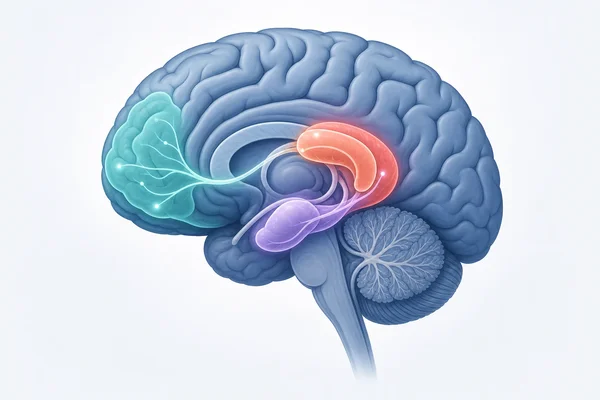
- The amygdala helps detect emotional importance and possible threat.
- The prefrontal cortex helps evaluate evidence, plan, and regulate reactions.
- The hippocampus adds memory and context.
- The hypothalamus helps turn brain alarm signals into body changes.
- Neurotransmitters and hormones carry chemical messages between cells.
So when people ask what happens in the brain to cause anxiety, the most accurate answer is a pattern: threat detection rises, regulation may weaken, stress chemistry increases, and the body receives a readiness signal.
Brain Chemicals That Shape Anxiety Signals
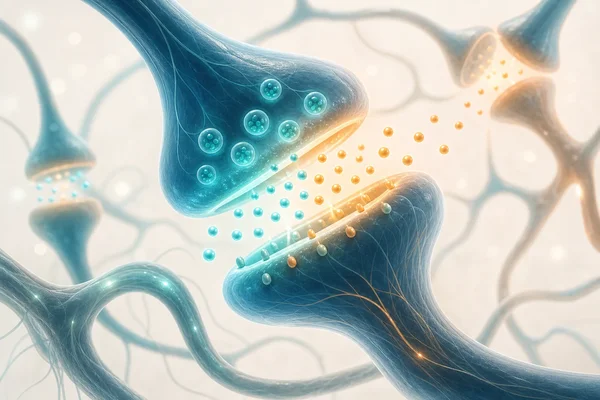
People often ask what chemical in the brain causes anxiety. There is no single anxiety chemical. A better way to think about it is balance and timing. Different messengers help the brain speed up, slow down, focus, remember, sleep, and judge risk. Anxiety can become more likely when these systems are pushed out of balance by stress, sleep loss, genetics, trauma, substances, medical factors, or ongoing uncertainty.
GABA and glutamate: the brake and accelerator
GABA is often described as a calming neurotransmitter because it helps quiet neural activity. Glutamate is a major excitatory neurotransmitter that helps brain cells communicate and stay active. Both are necessary.
If the brain's alarm network is too easily activated, too little braking or too much excitation may make worries, tension, and vigilance feel harder to turn down. This does not mean a person can feel their GABA or glutamate level directly. It means that the nervous system may be running in a more reactive state.
Serotonin, norepinephrine, and dopamine
Serotonin helps shape mood, sleep, appetite, and emotional processing. Norepinephrine is closely tied to alertness and the body's stress response. Dopamine supports motivation, reward, and learning. These chemicals do not work alone; they interact with circuits that interpret threat and safety.
When norepinephrine-driven alertness is high, the body may feel keyed up. When sleep and mood regulation are strained, worry may feel more persistent. When reward and motivation systems are affected, anxiety can make avoidance feel easier in the short term even if it narrows life over time.
Cortisol and the stress hormone loop
Cortisol is a stress hormone, not a villain. It helps the body mobilize energy during challenge. The issue is duration. If stress remains high for weeks or months, the brain and body may become more sensitive to reminders of danger. That can make anxiety feel like a loop: stress increases body symptoms, body symptoms feel threatening, and threat signals create more stress.
Brain Areas Involved in Anxiety
Anxiety is not located in one neat spot. It is a conversation among brain regions. That conversation can become intense, especially when the emotional alarm system is louder than the systems that add context and perspective.
Amygdala: the alarm detector
The amygdala helps the brain notice emotionally important signals. It is fast, protective, and sometimes overcautious. If it interprets a situation as threatening, it can send signals before the thinking brain has fully evaluated what is happening.
This is why anxiety can feel immediate. You may know logically that a meeting, text message, or body sensation is not dangerous, yet your body responds as if something is wrong. The amygdala is not trying to make life difficult; it is trying to protect you quickly.
Prefrontal cortex: the evaluator and regulator
The prefrontal cortex helps with planning, decision-making, impulse control, and emotional regulation. When it is working well, it can help you pause, check the evidence, and choose a response.
During strong anxiety, the prefrontal cortex may have less influence. The mind may jump to worst-case possibilities, decisions may feel harder, and reassurance may not last. This is one reason anxiety can feel so convincing even when the facts are mixed.
Hippocampus: memory and context
The hippocampus helps connect present experience with memory. It can tell the brain, "This is like something that happened before," or "This situation is different from the past."
When anxiety is high, the hippocampus may pull threat-related memories into focus. That can be useful if there is real danger, but it can also make neutral situations feel loaded. A place, smell, tone of voice, deadline, or body sensation may trigger worry because it resembles an earlier stressful experience.
Hypothalamus and autonomic nervous system: the body bridge
The hypothalamus helps translate brain alarm signals into body action. It can activate the autonomic nervous system, including the sympathetic branch that raises heart rate, quickens breathing, tightens muscles, and changes digestion.
This is why anxiety is not "all in your head." The brain and body are linked. The pounding heart, stomach changes, sweating, trembling, dry mouth, chest tightness, or tingling sensations are real body responses, even when the trigger is a thought, memory, or prediction.
Why an Anxious Brain Can Feel Different From a Calm Brain
Searches for "anxiety brain vs normal brain" often come from a very human worry: "Is something wrong with me?" A calmer framing is more accurate. An anxious brain is not a different species of brain. It is a brain in a state of heightened threat prediction.
In a calmer state, the brain can usually move between signals: notice a concern, evaluate it, take action if needed, and return attention to the present. In a more anxious state, the brain may keep scanning for danger. It may treat uncertainty as evidence of risk. It may pull attention toward body sensations, social cues, possible mistakes, or future outcomes.
That can affect daily life in practical ways:
- Concentration may drop because attention keeps returning to possible threats.
- Sleep may become lighter because the brain is staying on watch.
- Muscles may stay tense because the body is prepared for action.
- Digestion may shift because stress chemistry affects the gut.
- Avoidance may feel rewarding because it lowers anxiety briefly.
These changes can feel strange, but they are understandable. They are signs of a nervous system trying to protect you, not proof that you are weak or failing.
Can Anxiety Damage the Brain?
"Anxiety brain damage" is a frightening search term, so it deserves careful wording. Anxiety symptoms can be exhausting, and long-term stress may affect sleep, concentration, memory, mood, and physical health. But it is usually not helpful or accurate to assume that anxiety has permanently harmed the brain.
The brain is adaptable. Learning, therapy skills, supportive relationships, sleep routines, movement, stress reduction, and appropriate professional care can all help the nervous system practice different patterns. This adaptability is sometimes called neuroplasticity.
The practical takeaway is not panic. It is attention. If anxiety is frequent, intense, or interfering with work, relationships, school, sleep, or basic routines, it is worth seeking support. If anxiety comes with thoughts of self-harm, feeling unsafe, or fear that you might hurt yourself or someone else, contact emergency services or a crisis support line in your area right away.
What Causes Anxiety Attacks in the Brain and Body
Anxiety attacks and panic-like surges can feel sudden because the alarm system can activate rapidly. A trigger may be obvious, such as conflict or a crowded place, or internal, such as a skipped meal, poor sleep, caffeine, a racing heart, or a frightening thought.
Once the brain interprets a signal as danger, the body may react with adrenaline-driven changes. Heart rate rises. Breathing changes. Muscles tighten. The stomach may churn. A person may feel dizzy, unreal, hot, cold, shaky, or afraid of losing control.
Then a second layer can appear: fear of the symptoms themselves. A racing heart may be interpreted as proof that something is seriously wrong. Shortness of breath may create more fear. That fear amplifies the alarm, and the loop continues.
One useful skill is to label the loop without arguing with it. For example: "My threat system is active. These sensations are uncomfortable, and I can slow the next minute down." Slow breathing, grounding through the senses, loosening the shoulders, and naming visible objects in the room can give the brain present-moment context. These steps are not a replacement for care, but they can help some people ride out a surge more safely.
Ways to Help the Brain Settle Without Overpromising
People often ask how to reset the brain from anxiety or how to treat anxiety without medication. The honest answer is that there is no instant reset, and different people need different levels of support. Still, many brain-friendly habits and skills can reduce reactivity over time.
Try thinking in terms of signals:
- Safety signals: predictable routines, supportive contact, calming spaces, and clear next steps.
- Body signals: steady meals, hydration, movement, sleep, and lower stimulant load if caffeine worsens symptoms.
- Attention signals: mindfulness, grounding, journaling, or scheduled worry time.
- Learning signals: CBT-style thought checking, gradual exposure with support, and practicing uncertainty in small doses.
- Care signals: therapy, primary care, or mental health support when anxiety is persistent or impairing.
Medication can be part of care for some people, and psychotherapy can be helpful for many. The best path is personal. It depends on symptom pattern, medical history, preferences, access to care, and whether depression, trauma, substance use, chronic pain, or another concern is also present.
An educational online anxiety screening context can help you organize what you have noticed over the last two weeks. It should not be used as a final answer about your health, but it can make a professional conversation more concrete.

Connecting Brain Science With Your Own Anxiety Signals
Knowing what causes anxiety in the brain can reduce shame. Anxiety is not a character flaw. It is a protective system that may be responding too often, too strongly, or too long. Brain chemicals, threat circuits, memory, stress hormones, and body sensations all contribute to the experience.
The next helpful question is not "What is wrong with my brain?" It is "What patterns is my nervous system showing, and what support would help?" You might write down when anxiety appears, what body signals show up first, what you avoid, what helps even a little, and whether symptoms are affecting sleep, work, school, or relationships.
If you want a structured reflection point, an educational GAD-7 check can help you review common anxiety symptoms privately. Use the result as a conversation starter, not a label. For ongoing, intense, or confusing symptoms, a qualified healthcare or mental health professional can help you sort through causes and options.
FAQ
What causes anxiety in the brain chemicals?
Anxiety can involve several brain chemicals, including GABA, glutamate, serotonin, norepinephrine, dopamine, and stress hormones such as cortisol. It is not caused by one chemical alone. These messengers work inside larger circuits that detect threat, regulate emotion, store memory, and prepare the body for action.
What chemical in the brain causes anxiety?
There is no single chemical that causes anxiety for everyone. Norepinephrine may increase alertness, glutamate may increase excitation, GABA helps calm neural activity, and serotonin helps shape mood and emotional processing. The pattern matters more than one isolated chemical.
How does anxiety affect the brain and body?
The brain may become more focused on possible danger, while the body prepares for action. That can lead to racing thoughts, trouble concentrating, muscle tension, faster heartbeat, shallow breathing, stomach discomfort, sweating, trembling, or sleep disruption. These sensations are real stress responses.
How can you let go of anxiety?
Letting go usually means helping the nervous system learn safety over time, not forcing anxiety to disappear. Slow breathing, grounding, regular sleep, movement, writing worries down, reducing avoidance, and talking with a supportive professional can all help. If anxiety is intense or persistent, support is especially important.
What is the best treatment for anxiety?
There is no single best option for every person. Evidence-based psychotherapy, especially CBT, can help many people. Some people may also benefit from medication guided by a healthcare professional. Lifestyle habits, stress management, and social support can strengthen a care plan, but professional guidance is useful when symptoms interfere with daily life.
Can anxiety and depression happen in the brain together?
Yes. Anxiety and depression can overlap in mood, sleep, concentration, energy, and stress-response systems. They may involve some shared brain circuits, but they are not identical experiences. If both worry and low mood are present, a professional evaluation can help clarify what kind of support may fit.